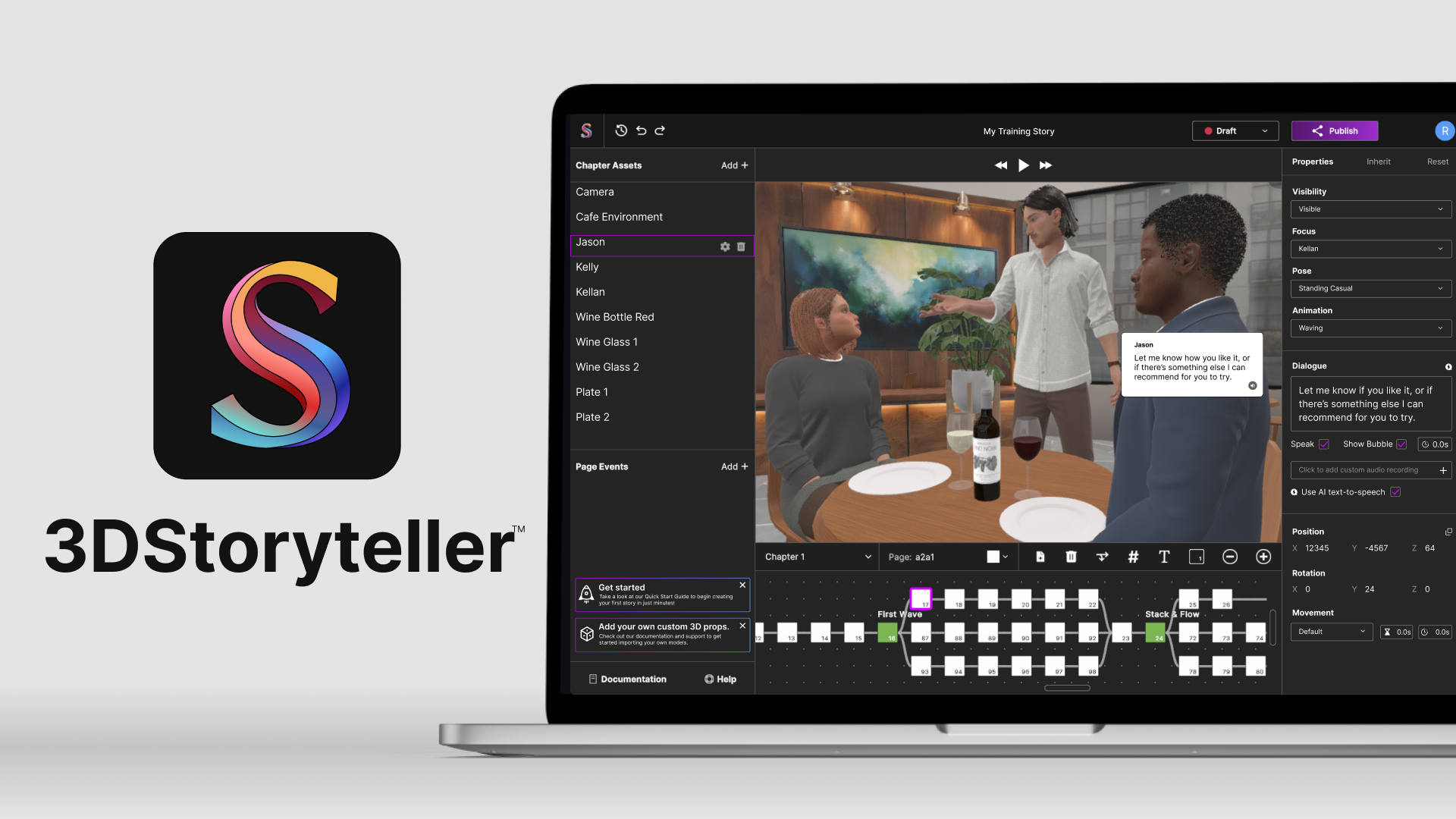
Designing a new category for interactive content creation, experiential learning, and workforce enablement.
EXECUTIVE SUMMARY
Organizations have invested heavily in digital training, yet engagement and real-world impact have remained consistently low.
We know what effective learning looks like. We see it in games, simulations, and experiences where people are actively engaged, making decisions, and seeing outcomes. But most training still relies on passive formats like PDFs, videos, and LMS modules.
These tools are easy to produce and scale, but they were never designed for how people actually learn, especially when it comes to complex, real-world skills. Retention is low, engagement is low, and for many new hires, the experience is actively draining.
At the same time, high-fidelity immersive learning proved effective, but it was too expensive, too complex, and too risky to scale.
3DStoryteller was created to close that gap.
I led the vision, product design, and go-to-market strategy for a no-code platform that enables teams and agencies to create and deploy interactive 3D simulation stories in hours instead of months. The platform grew from concept to millions in annual revenue and is now used by enterprise brands and agency partners to deliver scalable, measurable experiential learning.
THE CHALLENGE
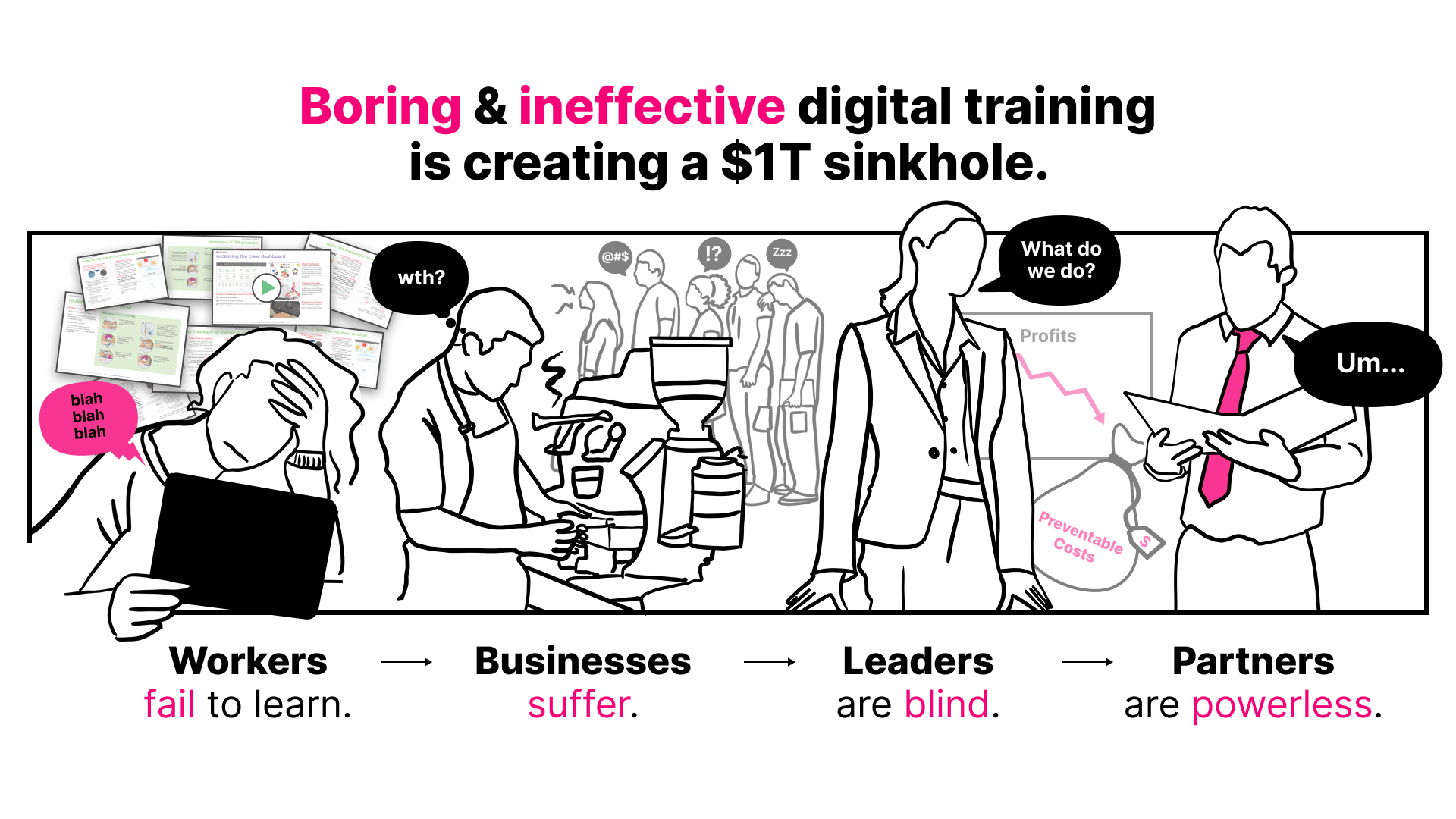
Immersive learning worked, but it could not scale.
Before 3DStoryteller, simulation-based training relied on custom development pipelines, specialized teams, and complex device ecosystems. While outcomes were promising, most organizations could not justify the long-term cost or operational burden.
At the same time, traditional training tools failed in a different way. They were simple and scalable, but fundamentally ineffective. Passive content does not hold attention, does not build intuition, and does not translate well to real-world performance. People are asked to absorb information without context, without interaction, and without consequence.
We saw this play out repeatedly. Teams would invest in training programs that checked every box on paper, but failed to change behavior in practice. Engagement dropped off quickly, and in many cases, new hires disengaged within the first week.
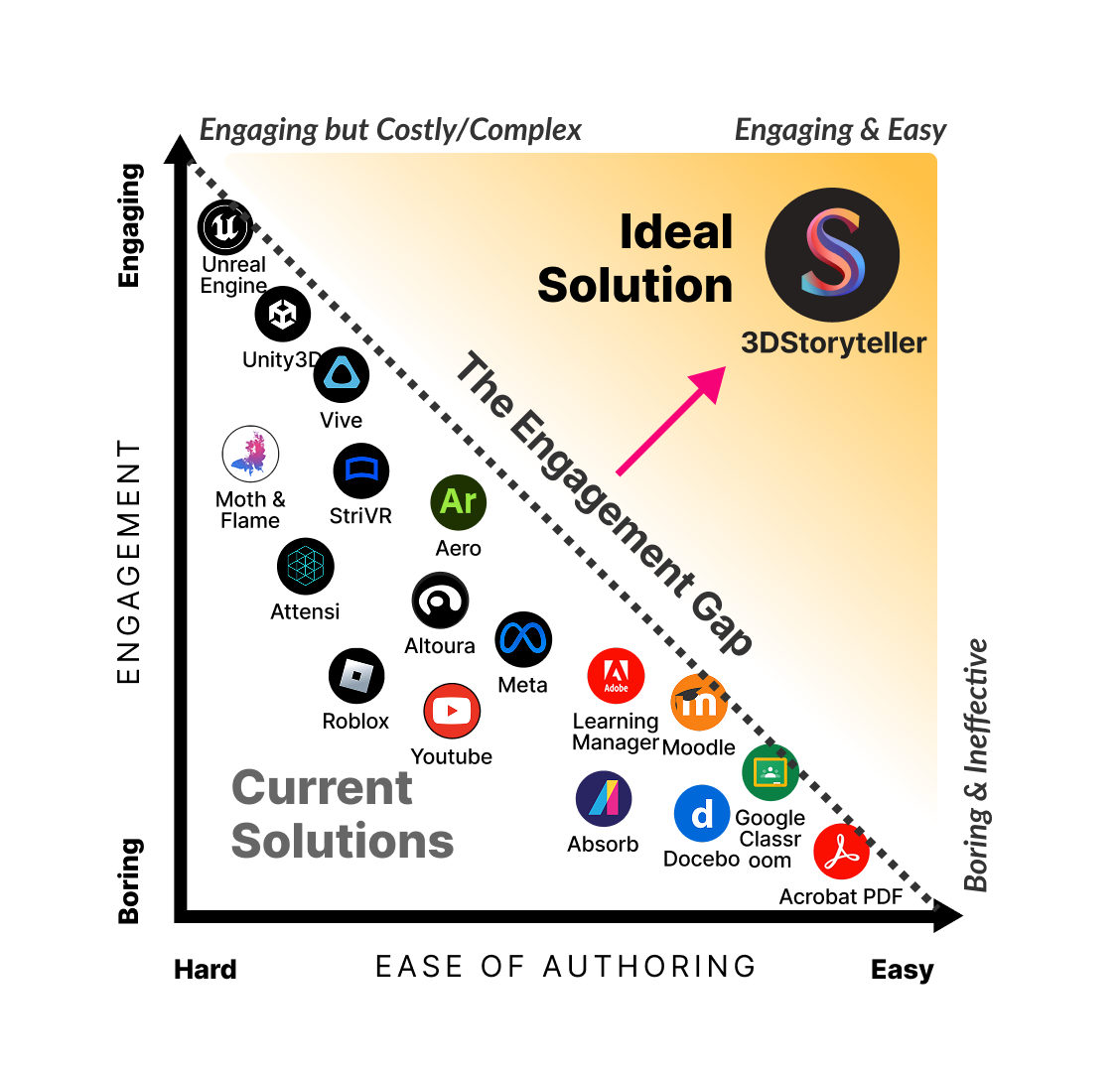
This tension revealed what we came to call the engagement gap: the space between what works and what organizations are realistically able to adopt.
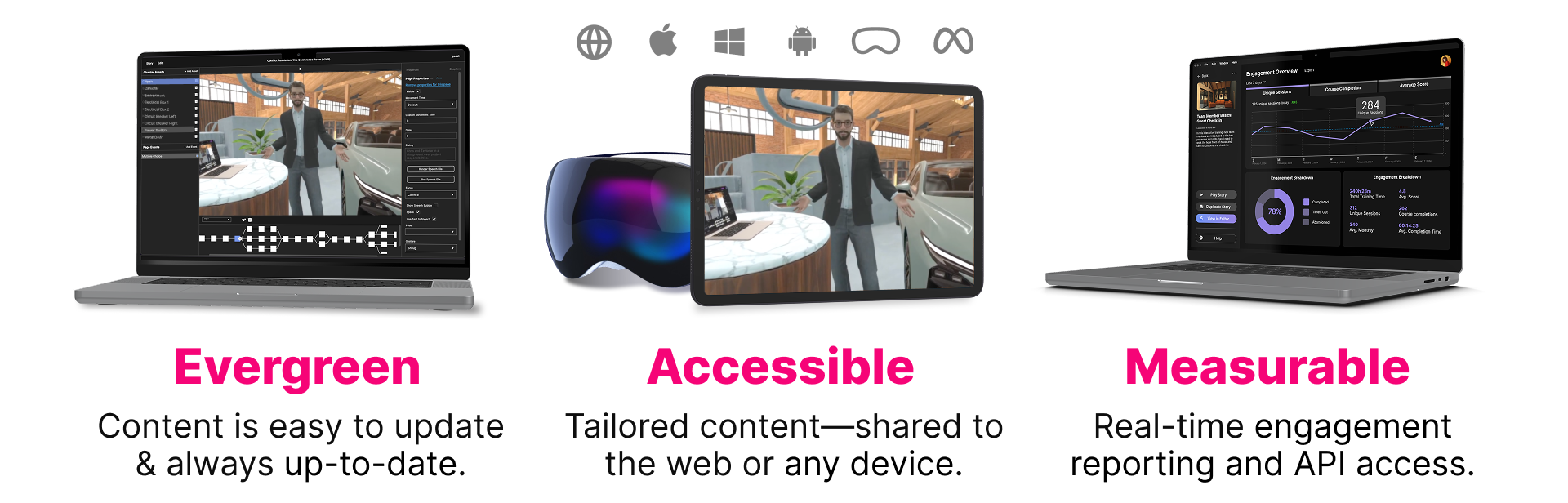
To close that gap, immersive storytelling needed to become:
- Easy to create and update
- Device-agnostic
- Scalable across thousands of employees
- Measurable and tied to real outcomes
MY ROLE
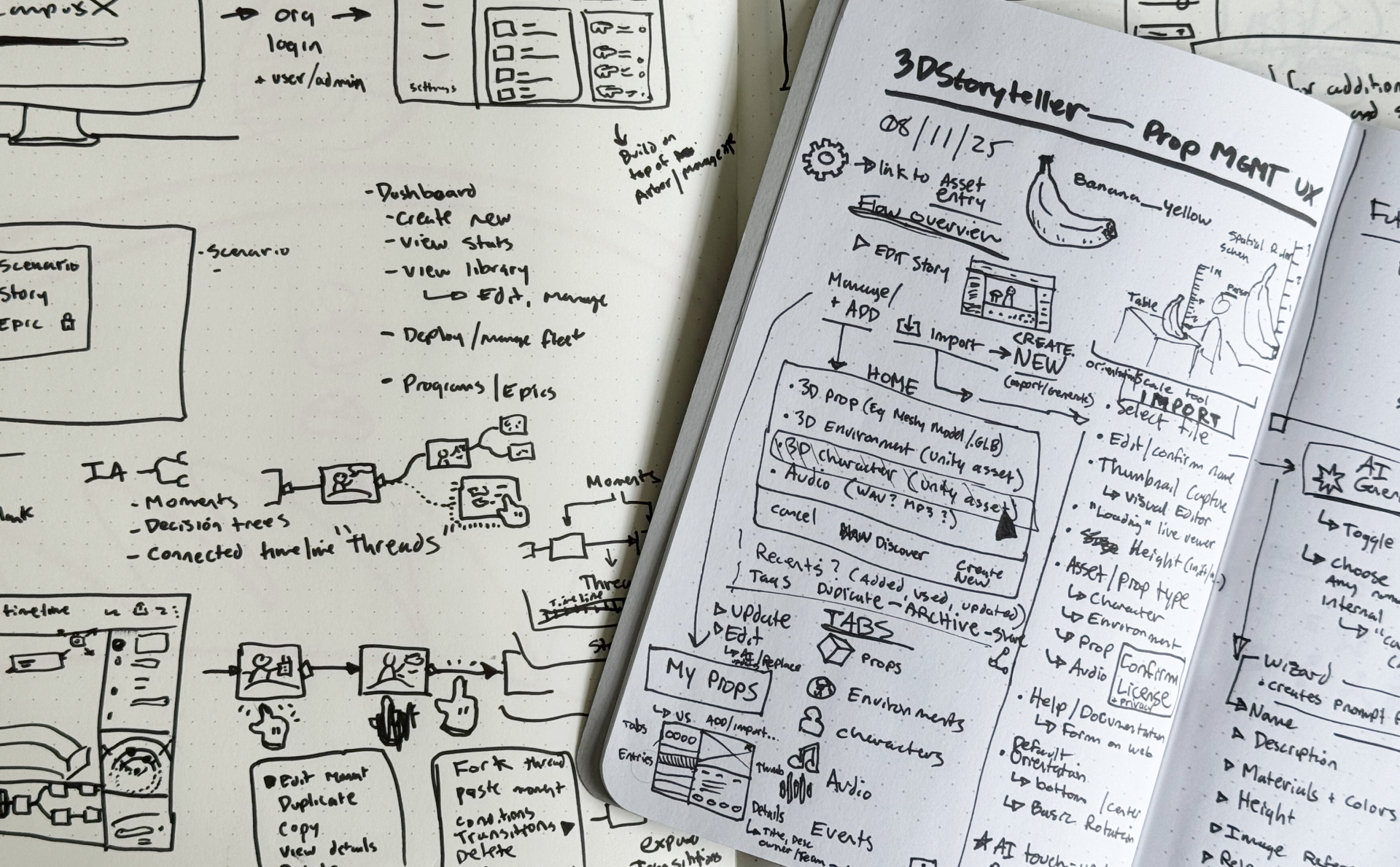
I led the product from concept through launch and growth, spanning both design and business strategy.
This included product vision and experience architecture, UX and interaction design, brand and platform positioning, pricing and go-to-market strategy, enterprise partnerships, and team leadership. I also led early exploration and integration of AI workflows to accelerate content creation.
At peak, I led a cross-functional team across design, engineering, art, and partnerships, while working closely with enterprise customers and agency partners to shape both the product and its real-world application.
KEY INSIGHTS & DESIGN DECISIONS
DESIGNING FOR STORYTELLERS, NOT DEVELOPERS
One of the earliest and most important insights was that most enterprise content creators are not developers.
Game engines offer immense flexibility, but that flexibility comes with a cost. Steep learning curves, technical risk, and long production cycles made them impractical for most teams.
We chose constraint over flexibility.
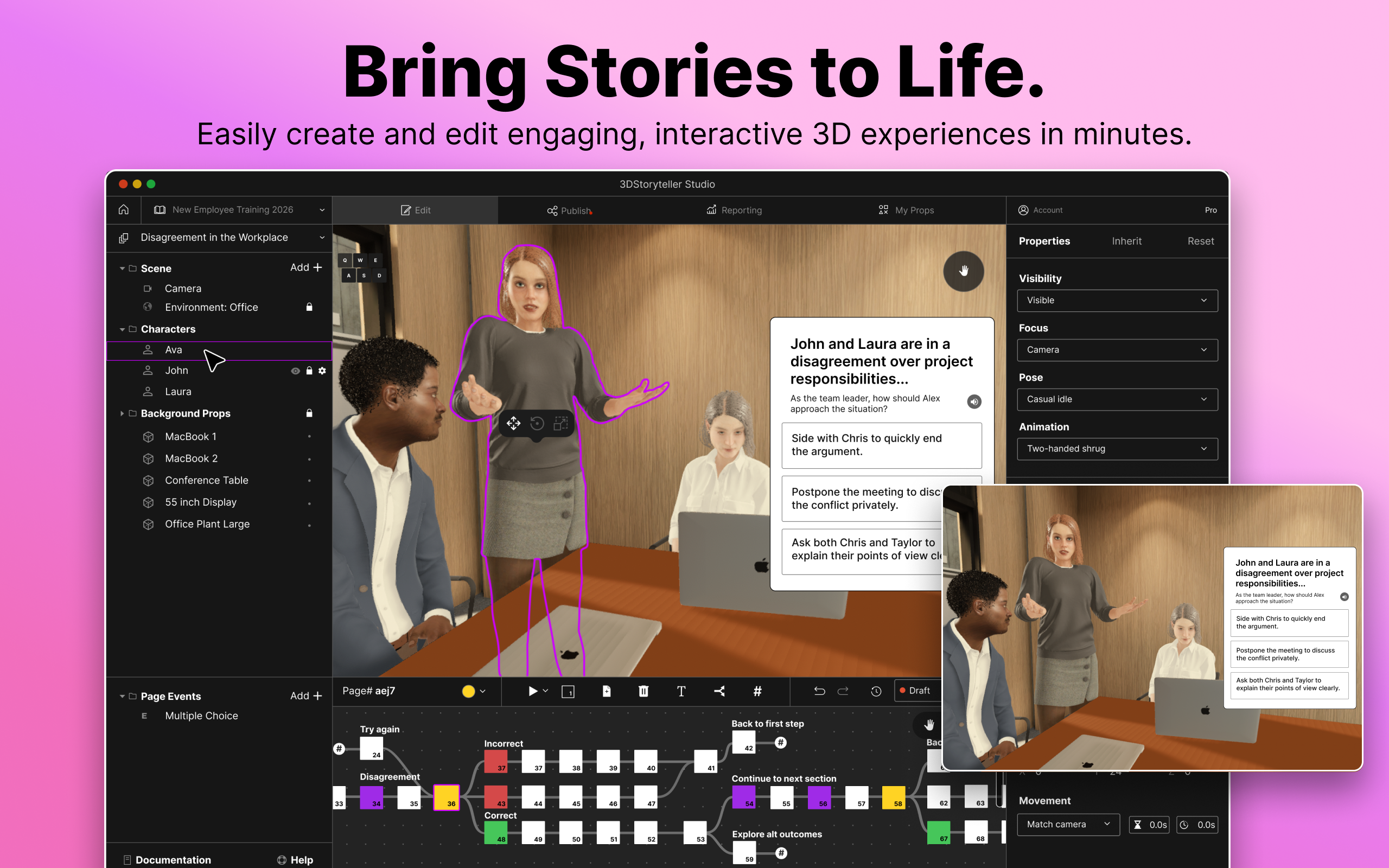
Rather than building a system that could do everything, we focused on a specific type of experience: interactive narrative simulations. The platform does not attempt to replicate a full game engine. Instead, it makes it easy to create scenes, direct characters, and simulate real-world scenarios with clarity and control.
The result is a tool that feels closer to iMovie than Unity. Powerful, but approachable, and learnable in hours instead of months.
FROM SYSTEMS THINKING TO STORY THINKING
Another key shift came from recognizing how different creators think.
Developers think in nodes, states, and systems. Storytellers think in scenes, beats, and moments.
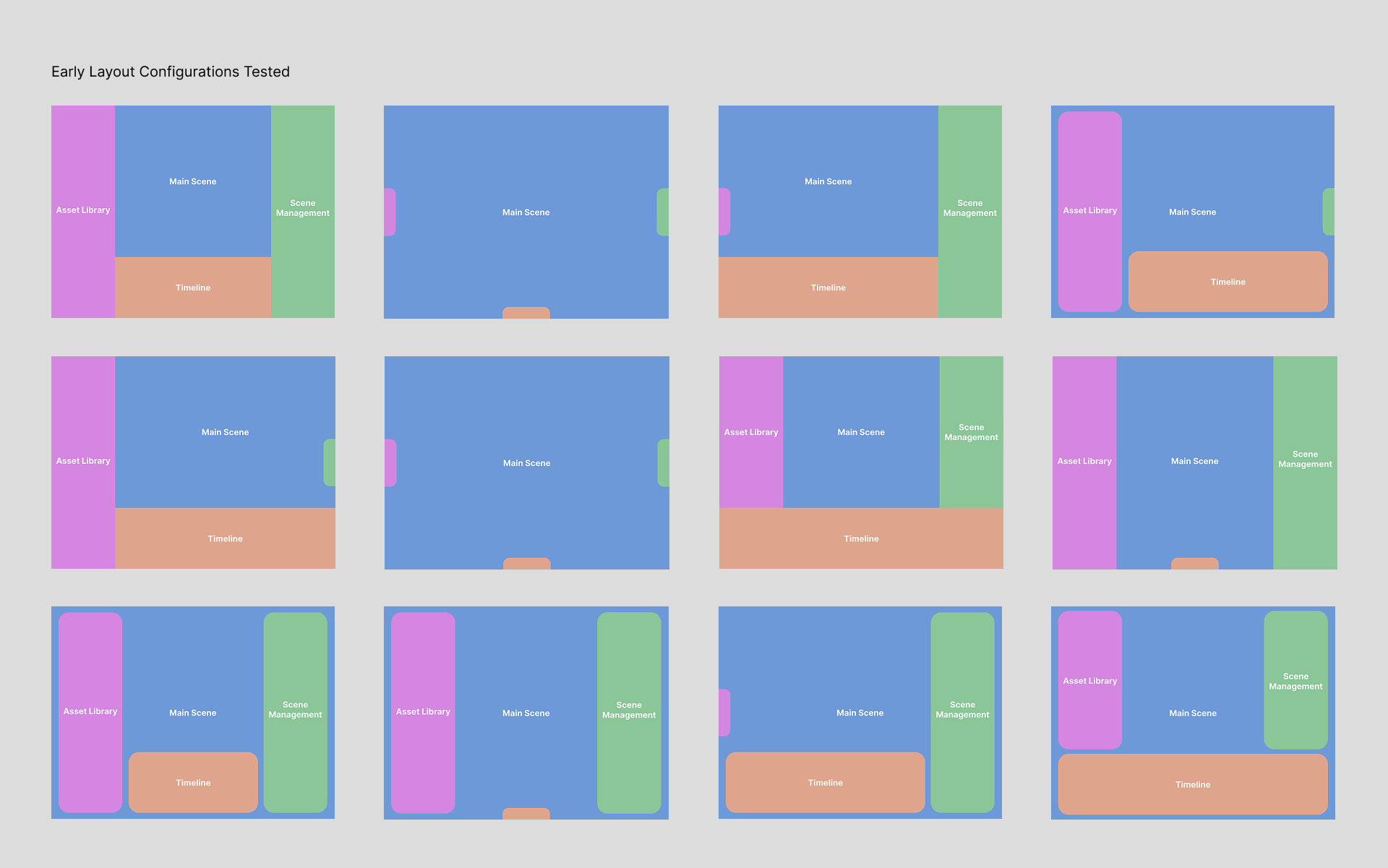
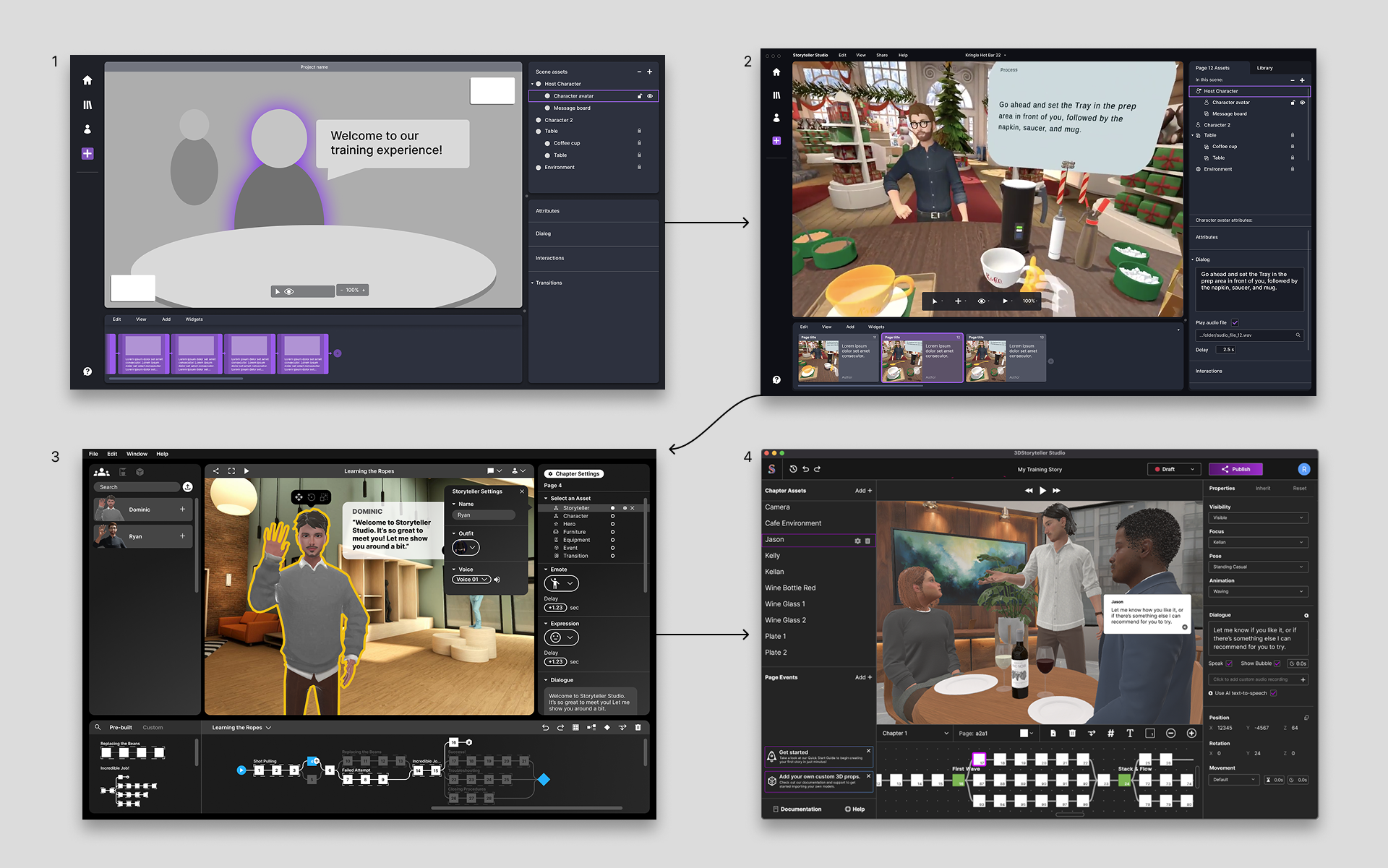
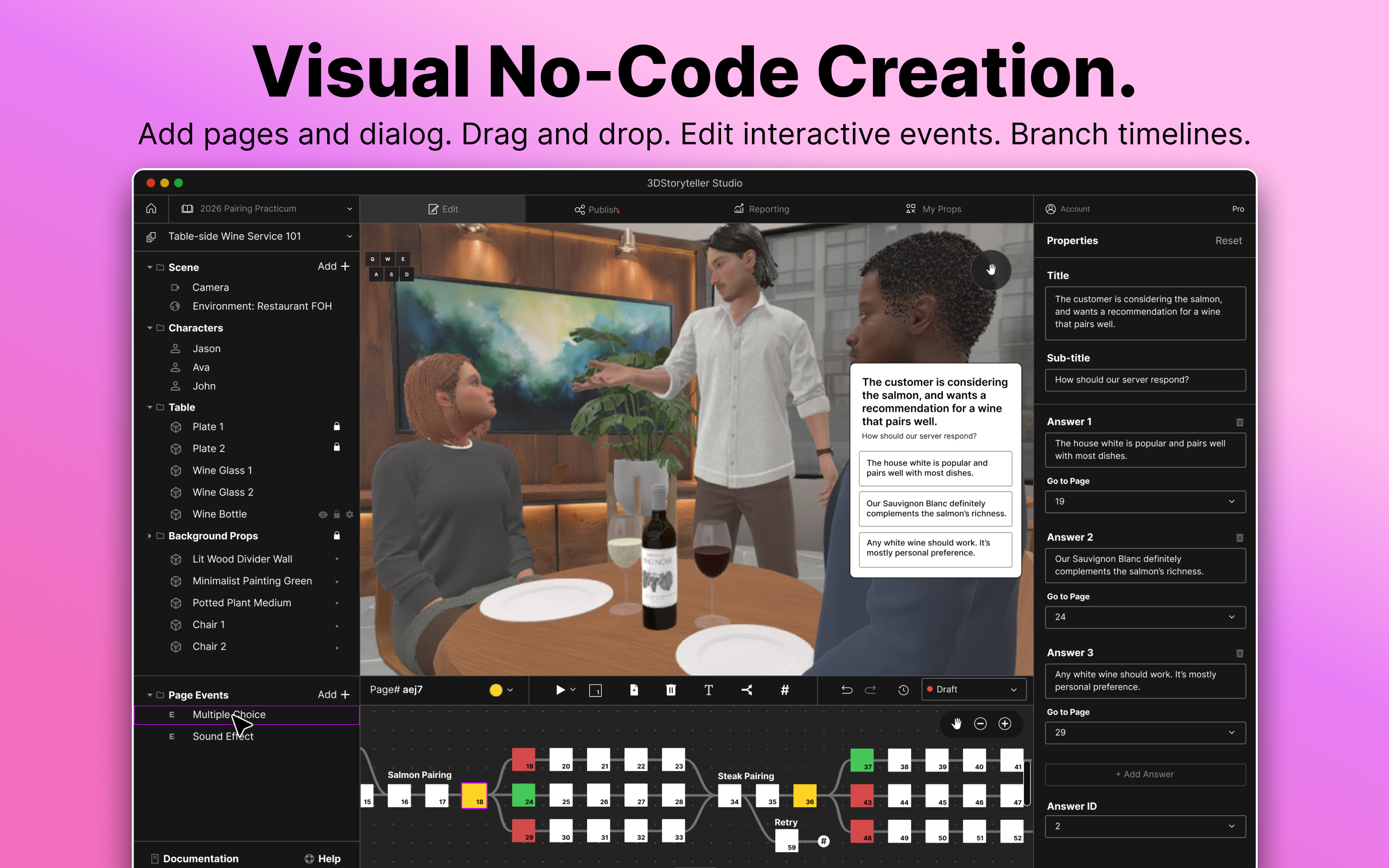
Traditional 3D tools rely on technical mental models that overwhelm non-technical teams. To address this, we introduced a page-based story timeline, where each page represents a moment in the experience.
This made it possible to build, visualize, and iterate on branching narratives in a way that felt natural. Teams could collaborate in real time, test ideas quickly, and publish instantly without relying on developer workflows.
DESIGNING FOR ADOPTION, NOT JUST CAPABILITY
We learned early that enterprise adoption depends as much on trust and simplicity as it does on capability.
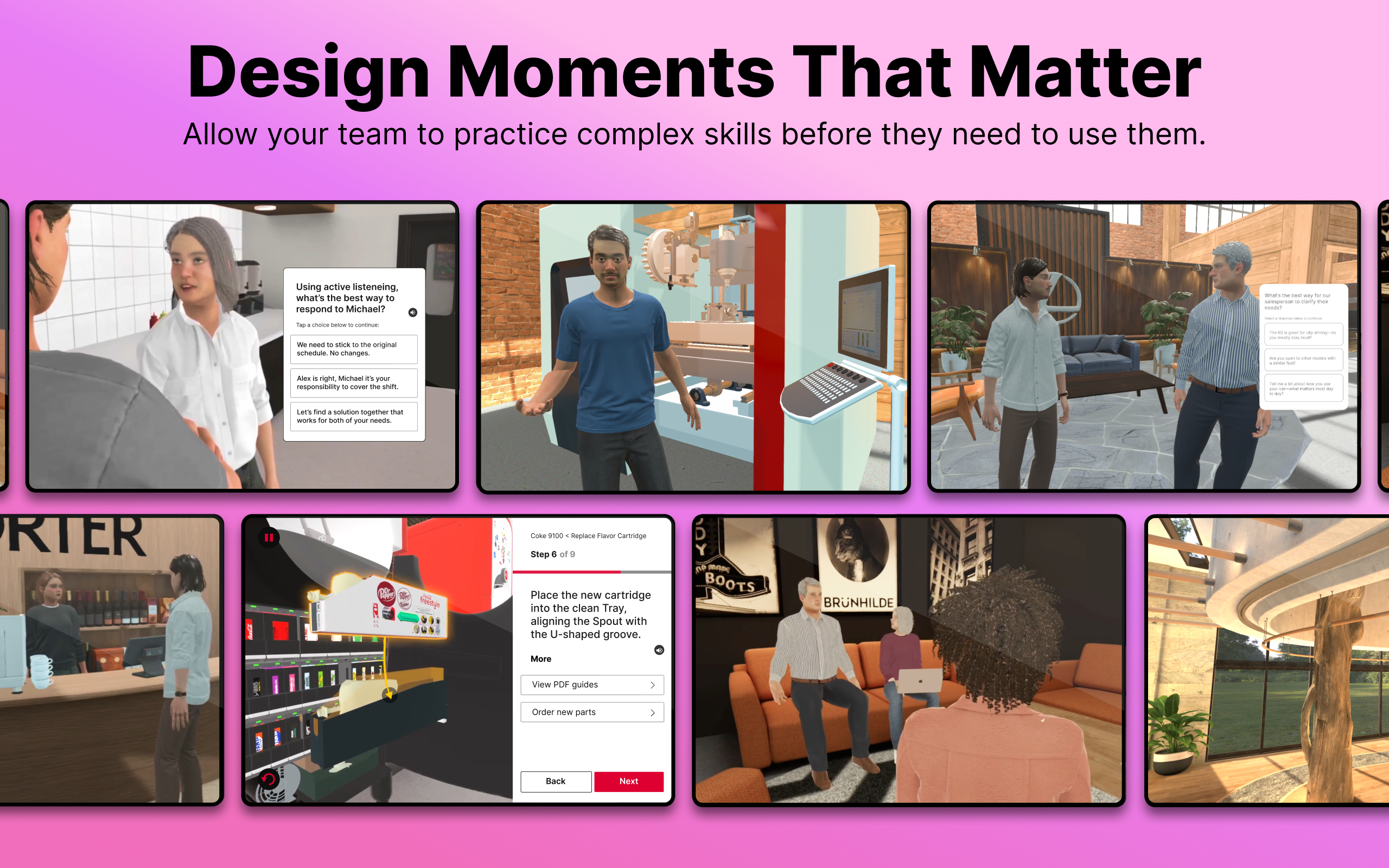
VR pilots generated excitement, but they also introduced friction. Hardware management, IT constraints, and unfamiliar workflows made scaling difficult.
We made a deliberate pivot to prioritize mobile and web delivery, building on top of devices organizations already trusted and deployed at scale.
This decision significantly reduced friction, accelerated adoption, and made it possible to deploy across tens of thousands of devices and locations.
AI THAT EMPOWERS CREATORS, NOT REPLACES THEM
As AI capabilities accelerated, there was a strong pull toward automation. Many tools in the space began positioning themselves as replacements for creators, generating entire experiences with minimal input.
We took a different approach.
Our users are not just content producers. They are trainers, operators, and subject matter experts with deep, contextual knowledge. The value of the system comes from their perspective, not from removing them from the process.
Rather than trying to automate the outcome, we focused on augmenting the process.
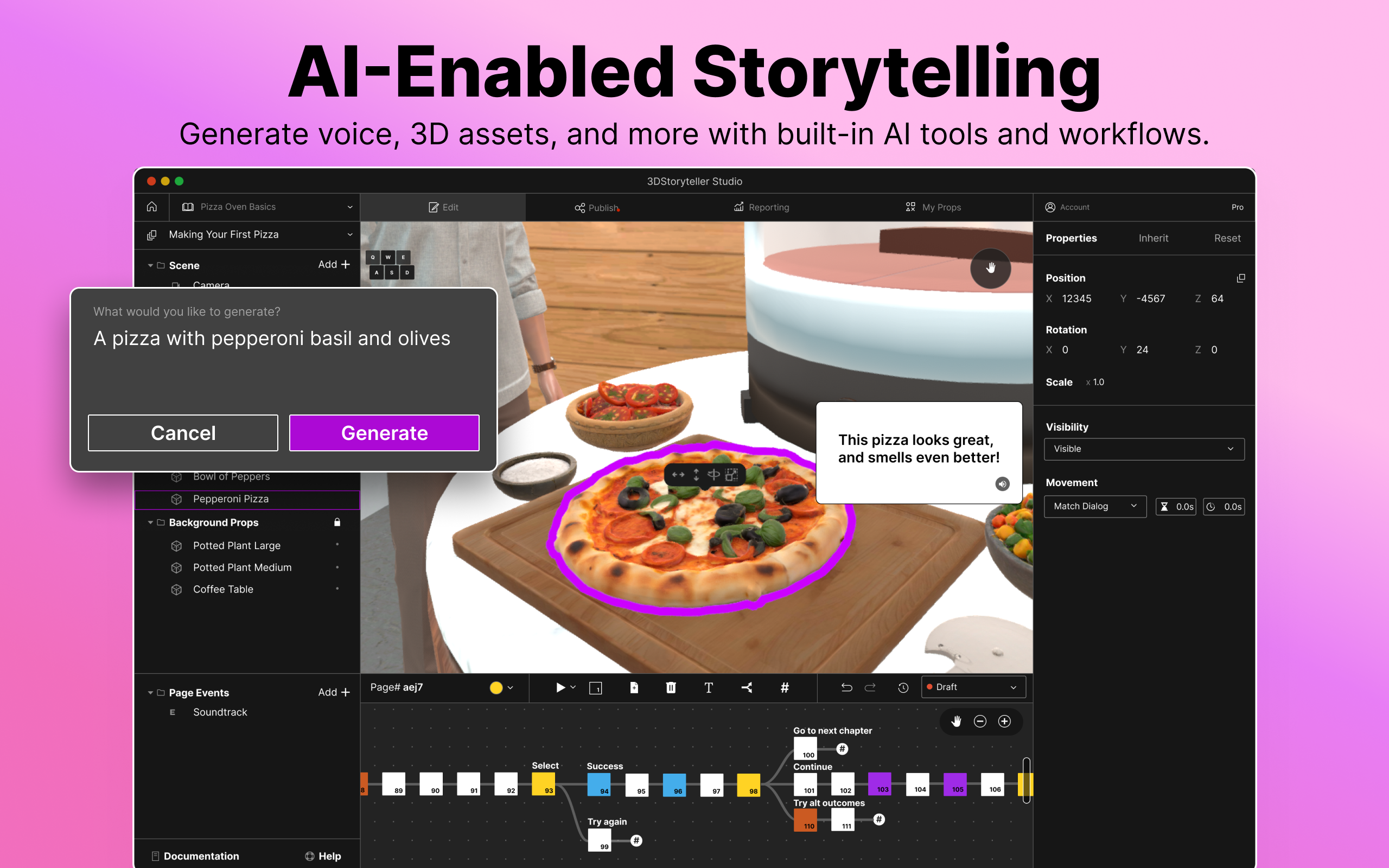
AI was introduced as a set of assistive capabilities that help creators move faster and explore more possibilities, generating voice, props, and variations, accelerating iteration, and lowering the barrier to getting started. But the structure, intent, and decisions remain firmly in the hands of the creator. This balance was critical.
By positioning AI as a collaborator rather than a replacement, we preserved the role of expertise while giving creators new leverage. The result is a system where people can produce higher-quality experiences in less time, without losing authorship or control.
REMOVING OURSELVES FROM THE EQUATION
One of the most important shifts was realizing that for the platform to truly scale, we could not remain a dependency.
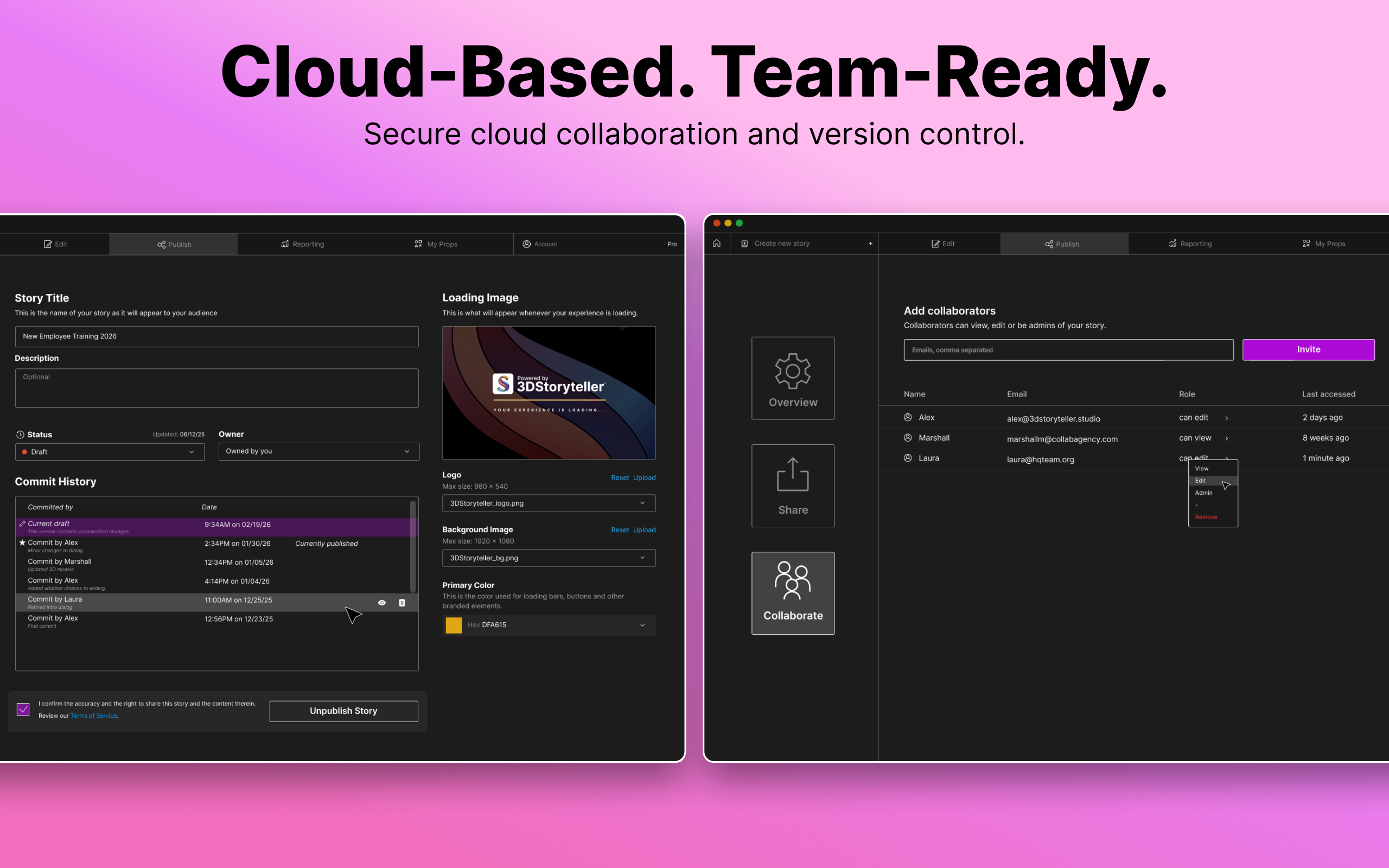
Our early work involved hands-on creation and delivery. But the real breakthrough came when we enabled agencies and internal teams to create and manage content themselves.
This transformed 3DStoryteller from a service into a platform, and created a model where content could scale independently of our direct involvement.
GO-TO-MARKET, ADOPTION & IMPACT
Early traction came through a marquee enterprise partner funding multi-year pilots and R&D, alongside a set of early agency adopters who began integrating the platform into their service offerings. This quickly evolved into a hub-and-spoke model, where enterprise teams focused on measuring ROI and outcomes, while agency partners created and scaled content across clients and use cases.
As adoption grew, this model created a compounding effect. Each new deployment increased both platform usage and content velocity, accelerating expansion across teams, locations, and industries.
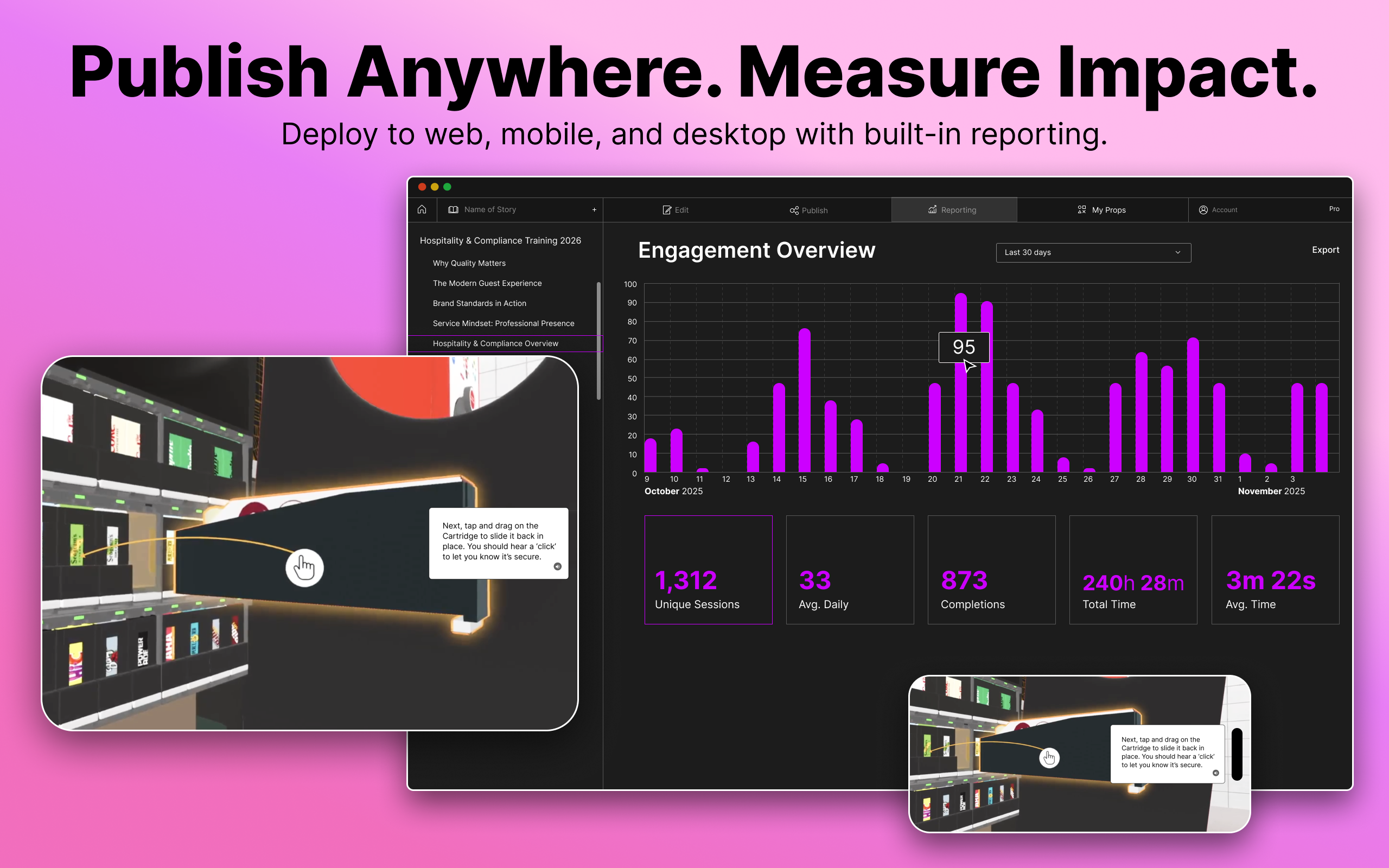
3DStoryteller grew from concept to millions in annual revenue, with thousands of early adopters and enterprise customers including Starbucks, Lexus, Coca-Cola, and Porter. Content creation timelines were reduced from months to hours or days, enabling teams to prototype, iterate, and deploy in real time. Pilots that once took months to launch could be live in days.
The platform scaled across tens of thousands of locations, with both agencies and internal teams independently creating and managing immersive content. This shift, removing reliance on developers and external production pipelines, was a key unlock for sustained adoption.
One of the clearest signals came during an early large-scale rollout. Engagement data showed significantly more playthroughs than there were employees. At first, this appeared to be an error. It wasn’t. Employees were sharing the experience with friends and family.
Training had become something people chose to engage with.
REFLECTION
3DStoryteller demonstrates how thoughtful product design can de-risk emerging technology, accelerate adoption, and unlock measurable business value.
The breakthrough was not adding more capability, but removing friction. By narrowing complexity and designing for real workflows, immersive storytelling became something teams could actually use, own, and scale.

Behind the brand: The 3DStoryteller logo was inspired by the idea of "extruding knowledge" beyond the flat mediums people were used to, and into tangible dimensions. Here, the twisted S monogram takes form, from simple concept to a vibrant and distinctive brand identity.
Selected Works
3DStorytellerExperiential Storytelling Platform
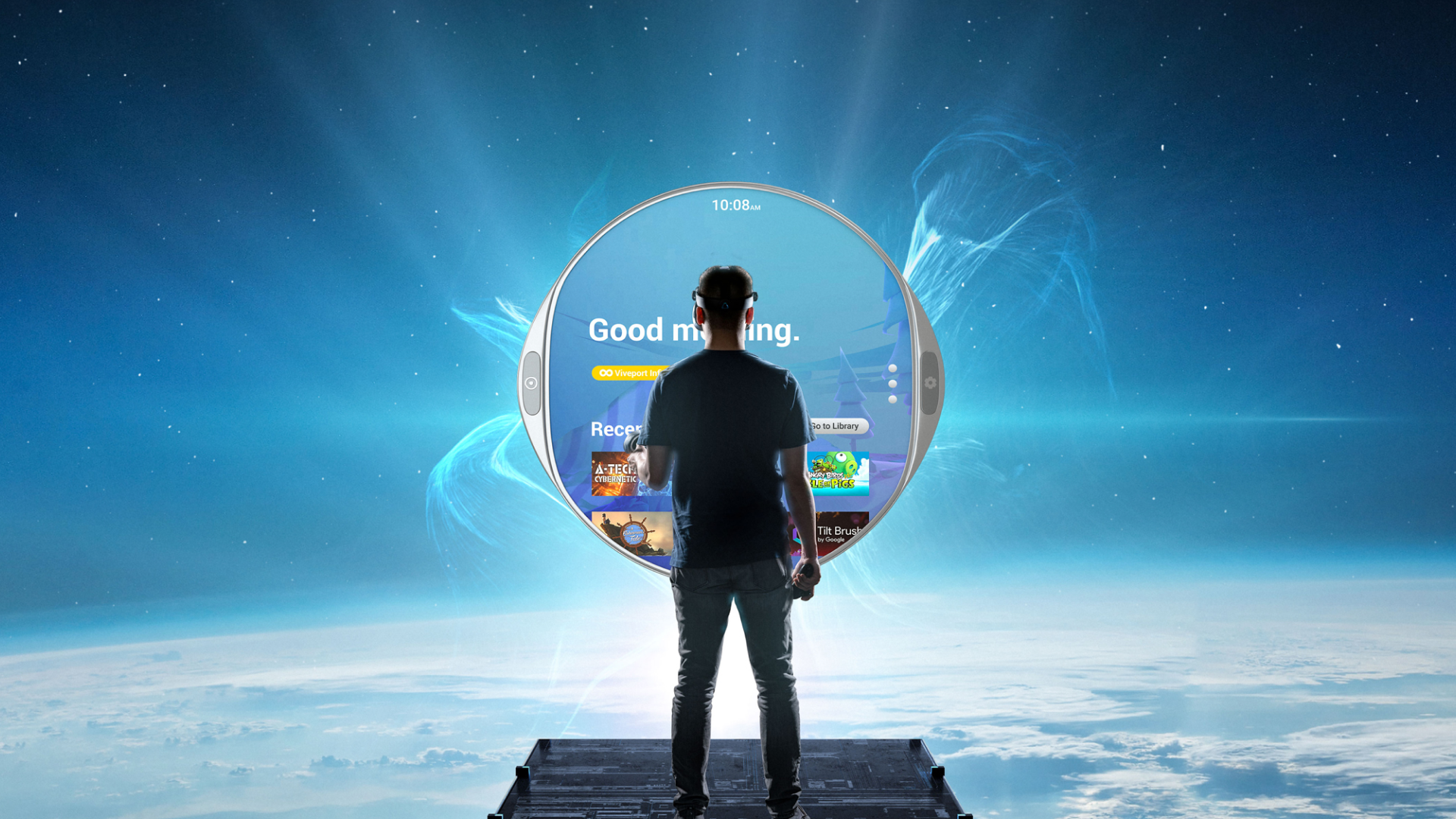
Vive Reality System (HTC Vive)Spatial Interaction System
Vive Video (HTC Vive)Immersive Media Player
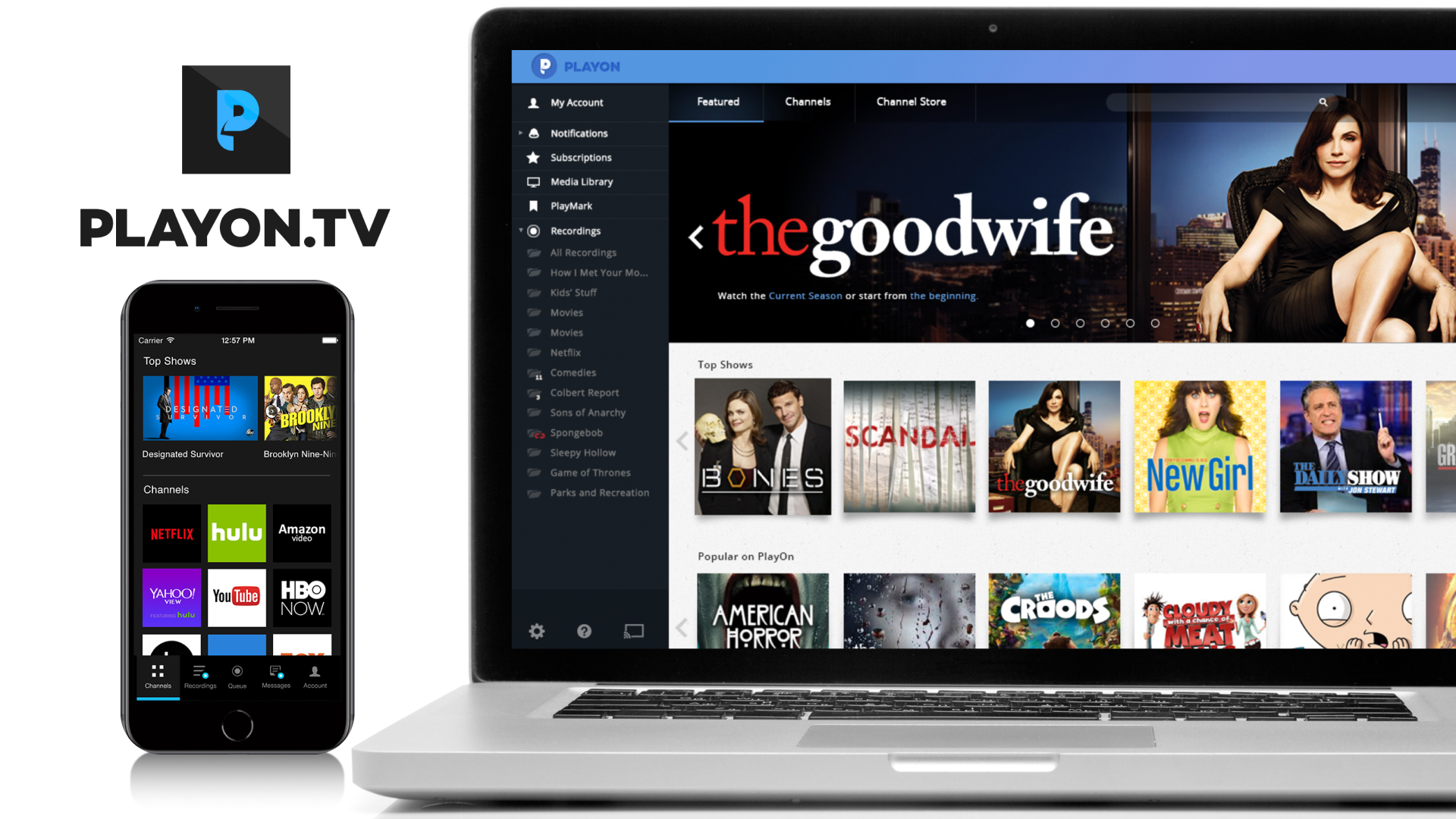
PLAYON.tvStreaming Media Aggregator

SkryMinimal Wayfinding for Riders