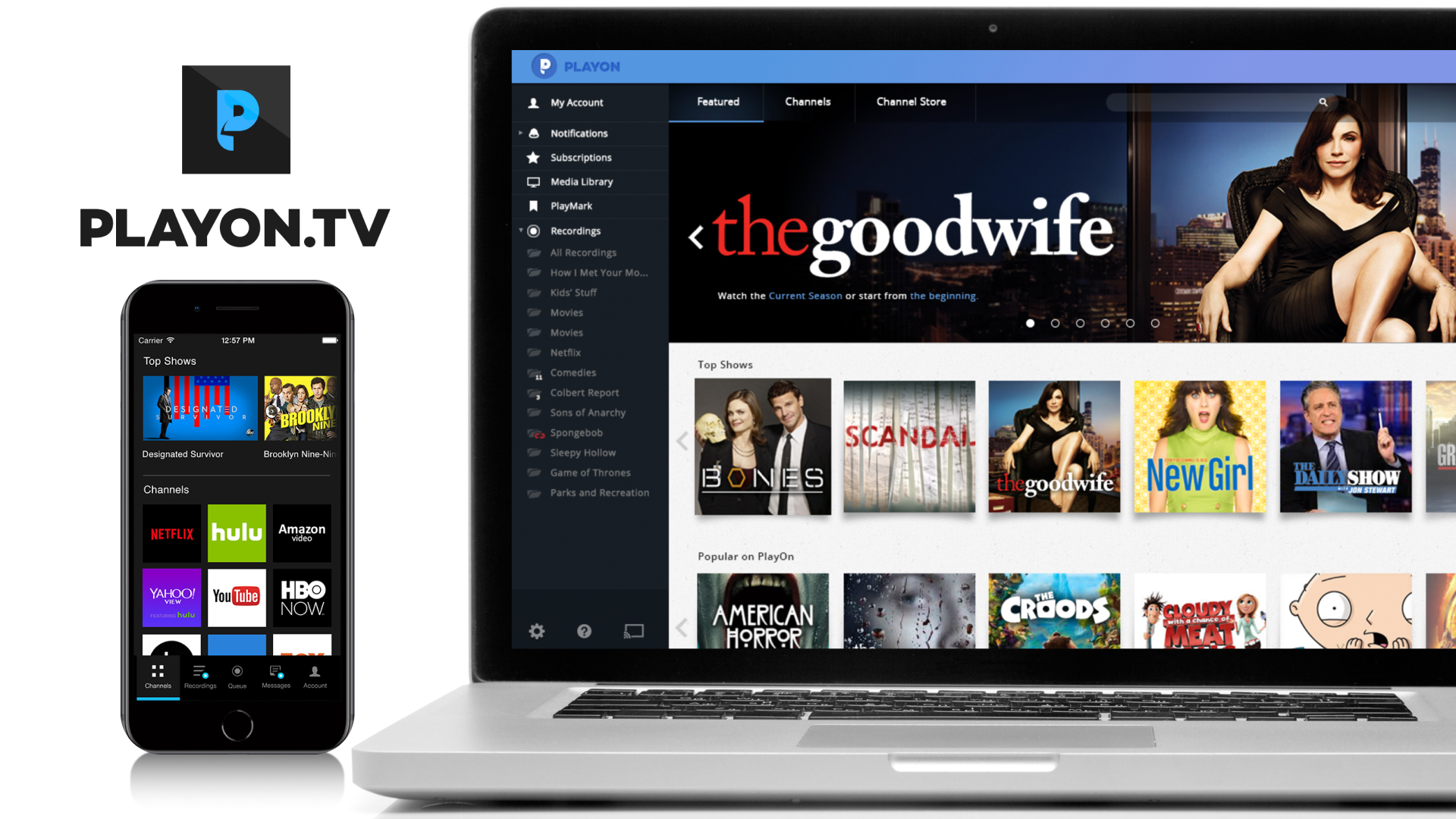
PLAYON.tv
Reframing streaming access as a unified product experience
EXECUTIVE SUMMARY
PlayOn emerged during a pivotal moment in the evolution of streaming media.
Access to content was expanding rapidly, but control remained limited. For cord cutters in particular—those wishing to abandon cable television altogether—content was fragmented across services, availability was inconsistent, and offline access was unreliable or nonexistent.
PlayOn introduced a different model. Built on legal precedent that allowed individuals to record content they had rights to, it enabled users to capture, store, and watch streaming media on their own terms.
When I joined, the opportunity was not to invent a new product, but to redefine and unify a fractured product ecosystem that already existed. I led a company-wide reinvention effort across product, brand, and business model, transforming features and services into a cohesive, scalable platform.
THE CHALLENGE
The core idea behind PlayOn was powerful, but the product experience had drifted.
Over time, the company had introduced multiple applications and add-ons, each designed to extend functionality or monetize existing users. These efforts were well-intentioned, but they resulted in a fragmented system that exposed internal decisions to the customer.
Core products PlayOn and PlayLater operated as separate apps with different brands, interfaces and workflows. The website presented more like a chaotic marketplace than a clear entry point, with a collection of loosely connected offerings rather than a unified service.
Below: A look at PLAYON's existing ecosystem, across web, mobile, desktop and 10-foot interfaces (ex., Roku, Chromecast)
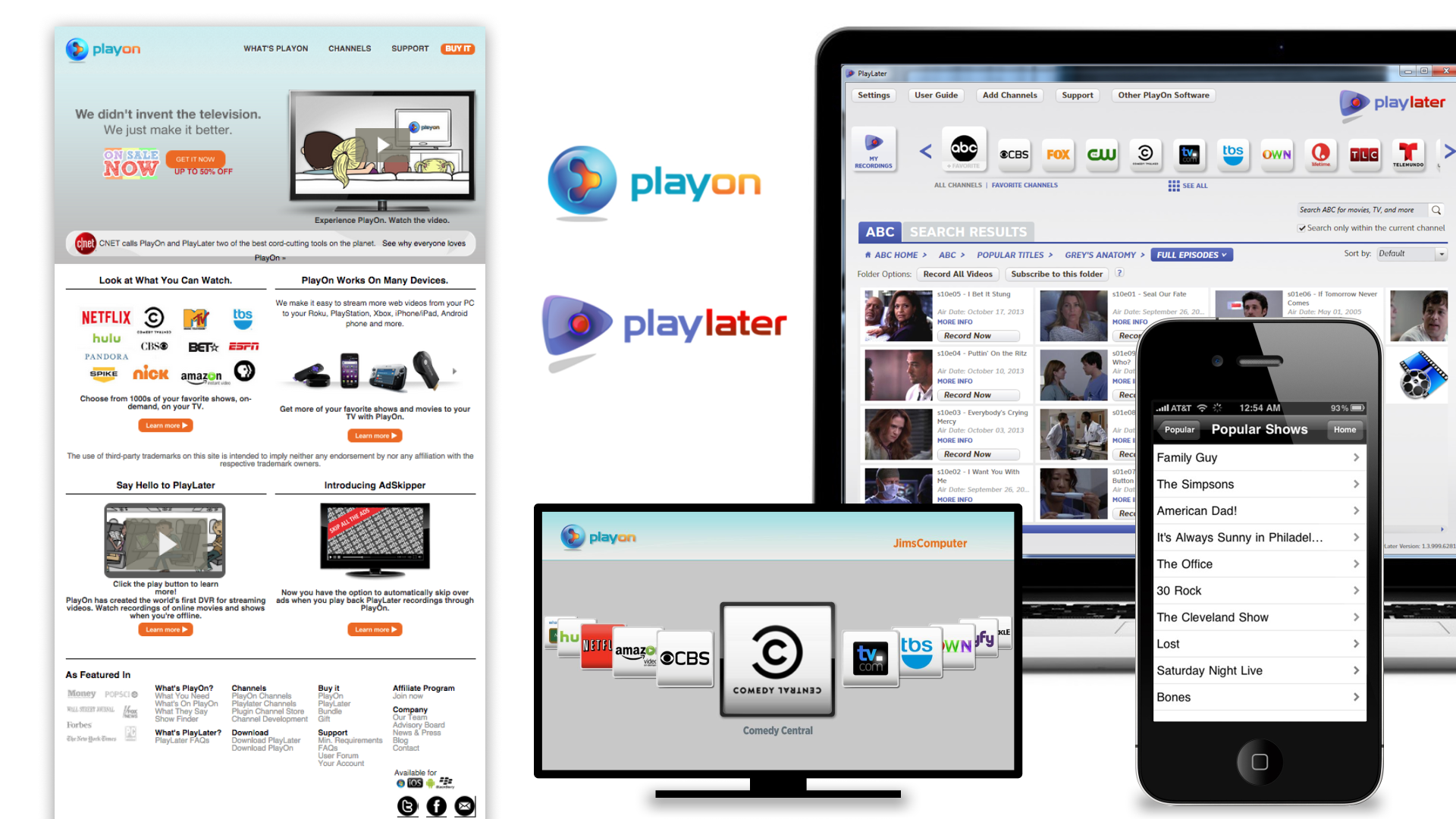
What should have felt like a simple, empowering capability instead required users to piece together how everything worked. Most visitors left without purchasing anything.
At the same time, the broader market was still immature. Streaming platforms were growing, but lacked the flexibility users expected. Content rotated in and out of availability, offline viewing was limited, and managing access across services was cumbersome.
The opportunity was not just to improve usability, but to redefine PlayOn as a cohesive system that gave users a clear sense of control over their media.
MY ROLE
I served as Product Design Lead, with responsibility across the full product and customer experience.
My work spanned core product UX and interaction design, user research and testing, brand and visual identity, and web and marketing design. I worked closely with product, engineering, and leadership teams to align design decisions with business strategy, while supporting rollout and adoption across platforms.
This role required not just improving individual features, but shaping how the entire system was understood and experienced.
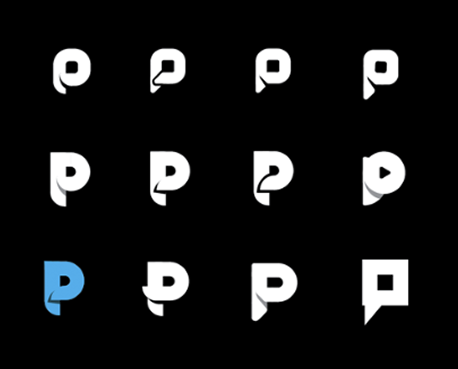
Image: Various concepts for a brand redesign focused on an iconic 'P' monogram.
PROCESS & APPROACH
This work required more than redesigning a product. It meant realigning a fragmented organization around a shared vision.
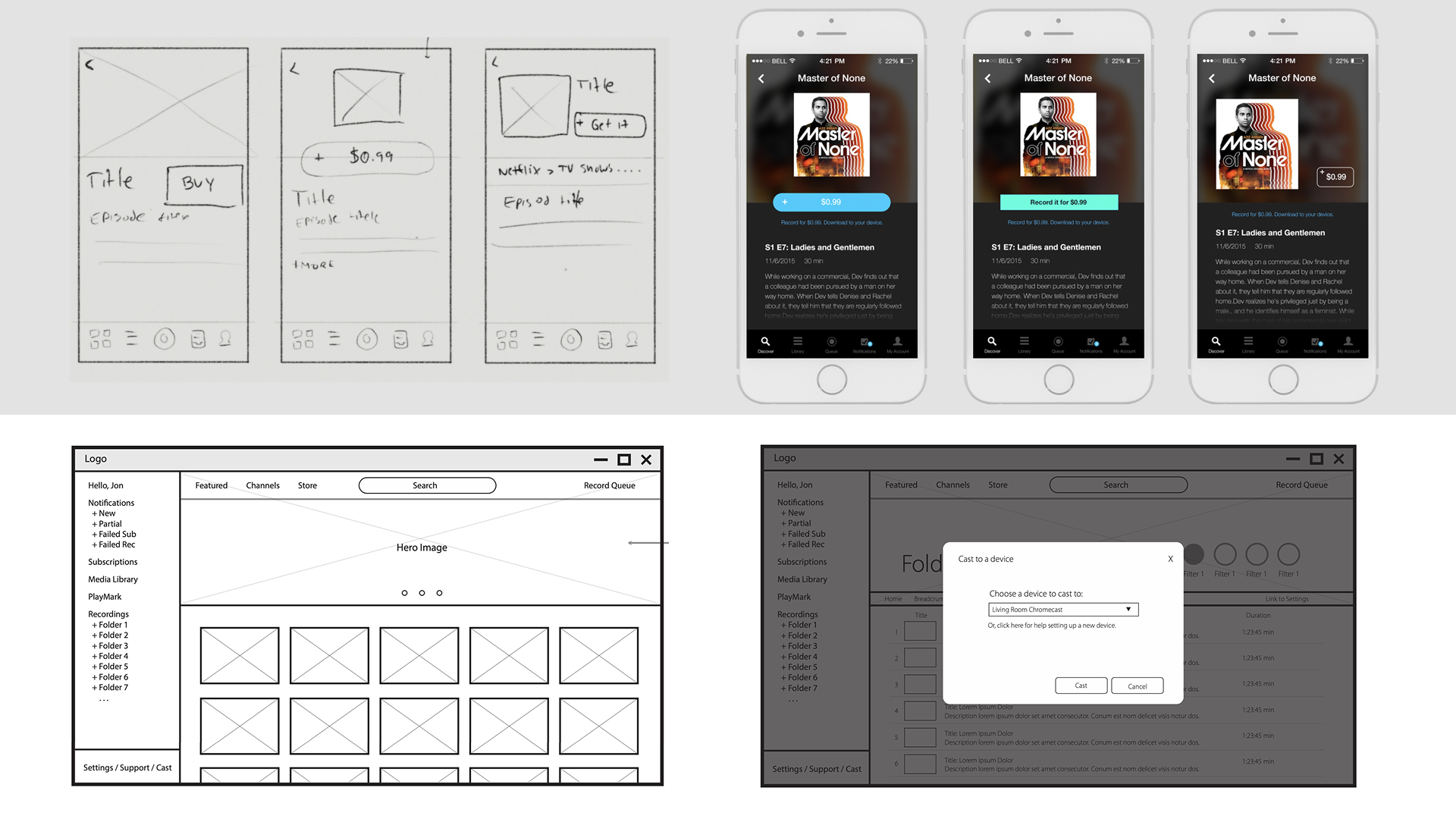
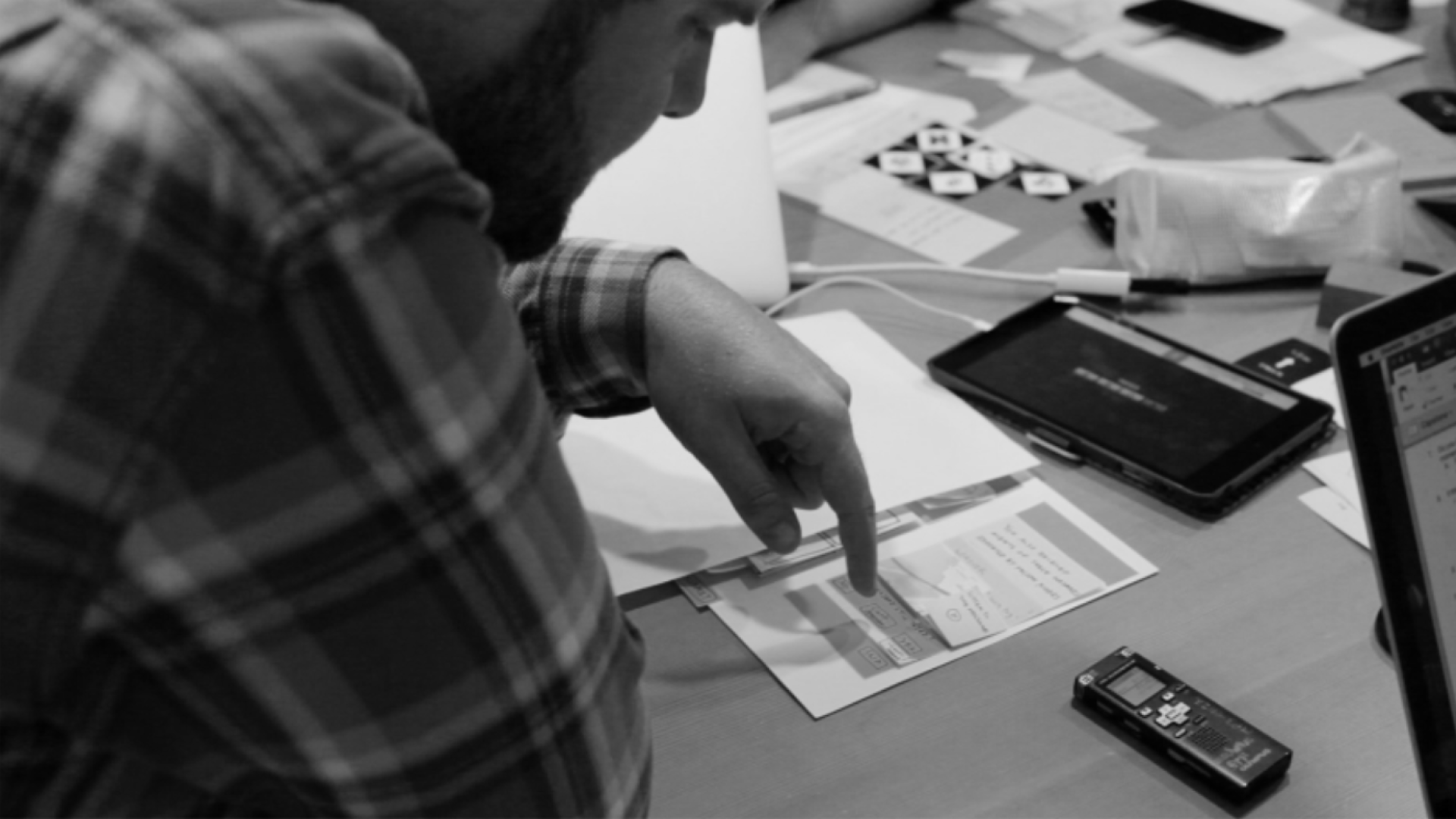
I led a human-centered design process grounded in research, rapid ideation, and iterative development. Early on, we worked to understand both user needs and internal assumptions, identifying gaps between how the product was built and how people actually wanted to use it.
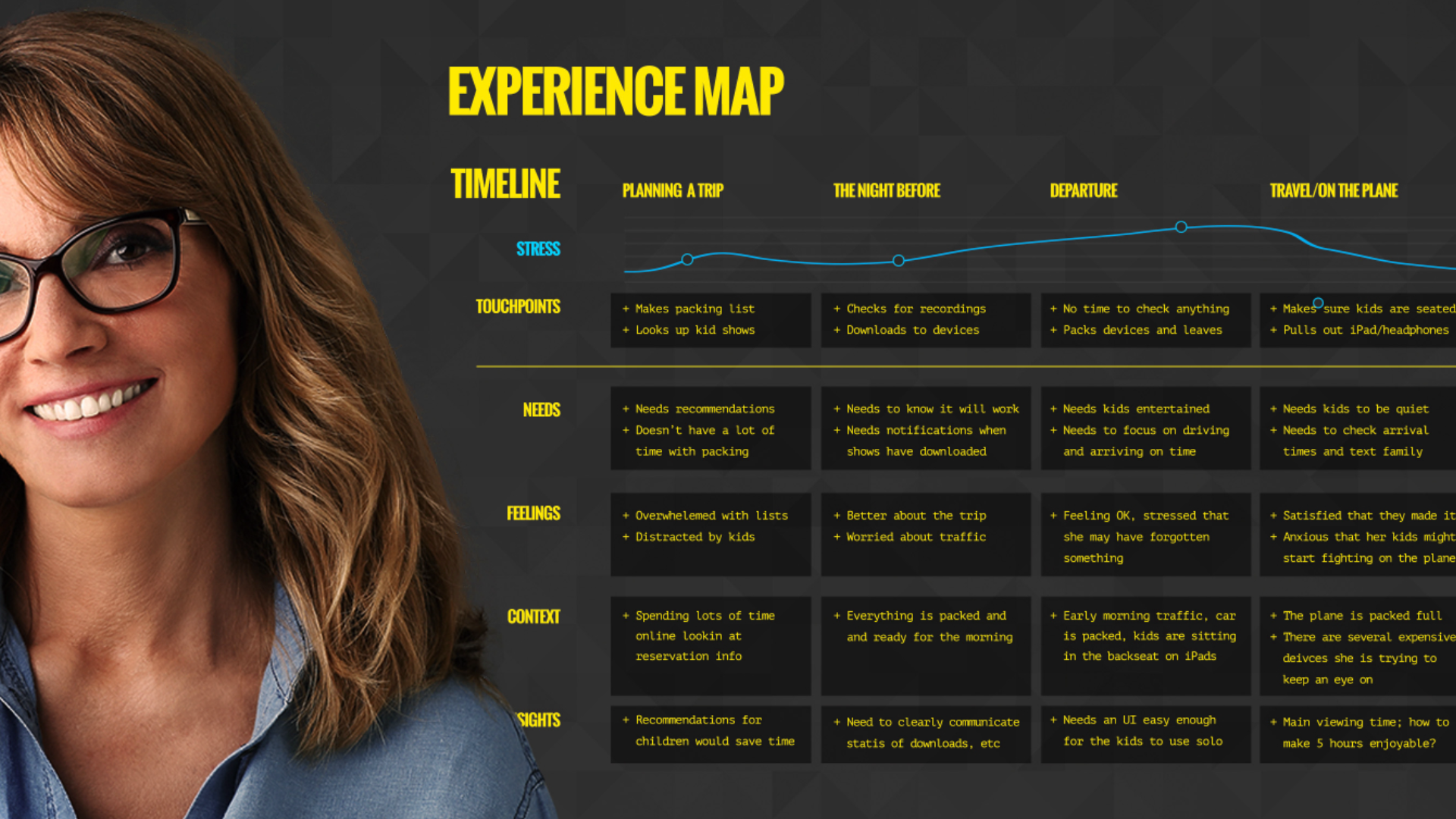
From there, I helped establish a set of foundational artifacts, including user journeys, personas, and a unified information architecture, that clarified the end-to-end experience and exposed opportunities for simplification and cohesion. These artifacts became critical tools for aligning product, engineering, marketing, and leadership teams around a single direction.
Rather than treating design as a downstream function, we used it as a unifying layer across the organization, continuously refining concepts through prototyping, testing, and close collaboration with engineering to ensure ideas translated cleanly into build-ready solutions.
KEY INSIGHTS & DESIGN DECISIONS
UNIFYING THE PRODUCT
The most important shift came from reframing PlayOn as a single product rather than a collection of tools.
Users were not thinking in terms of recording versus downloading, or one application versus another. They were trying to solve a simpler problem: how to access and control their content across services.
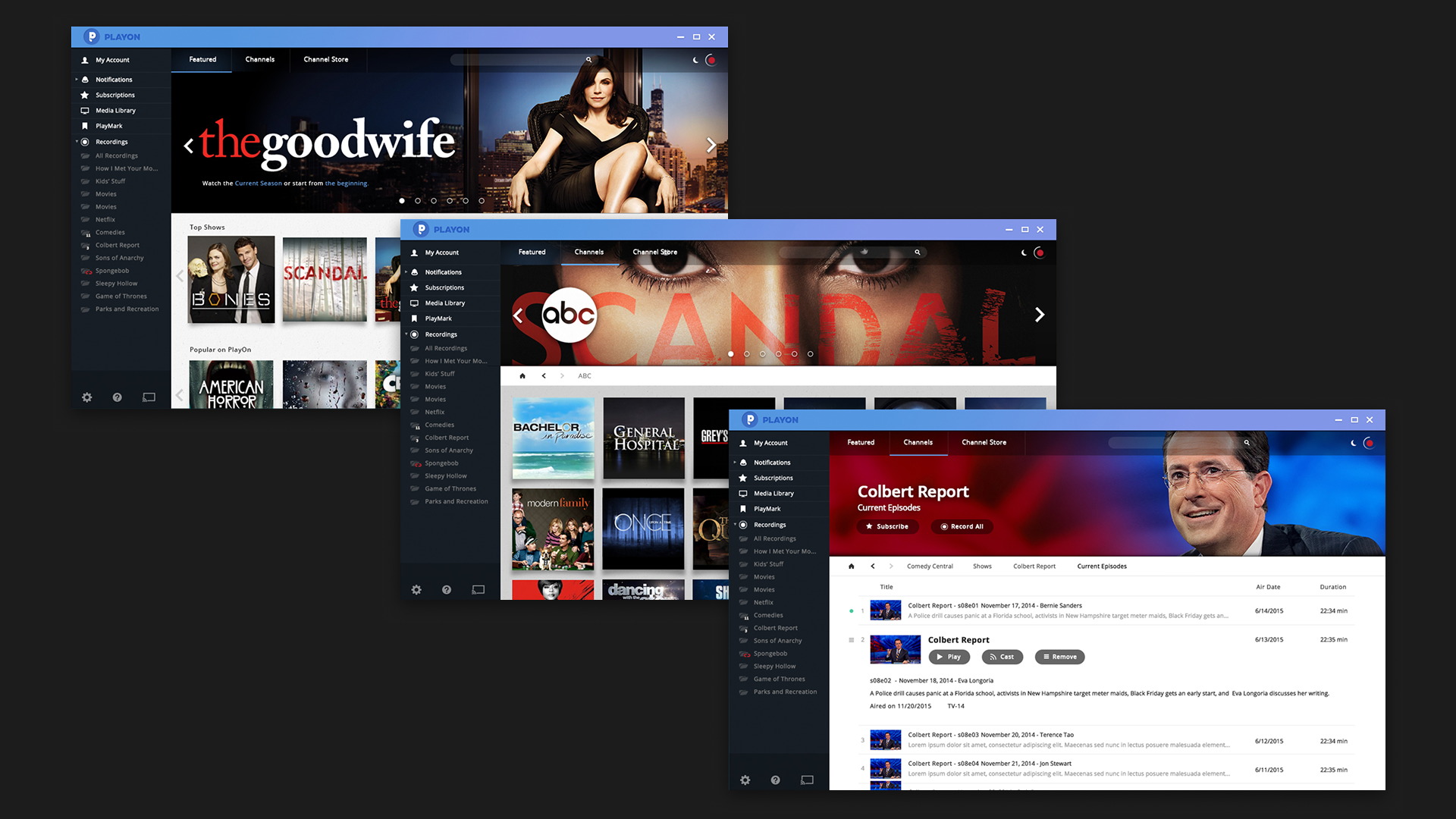
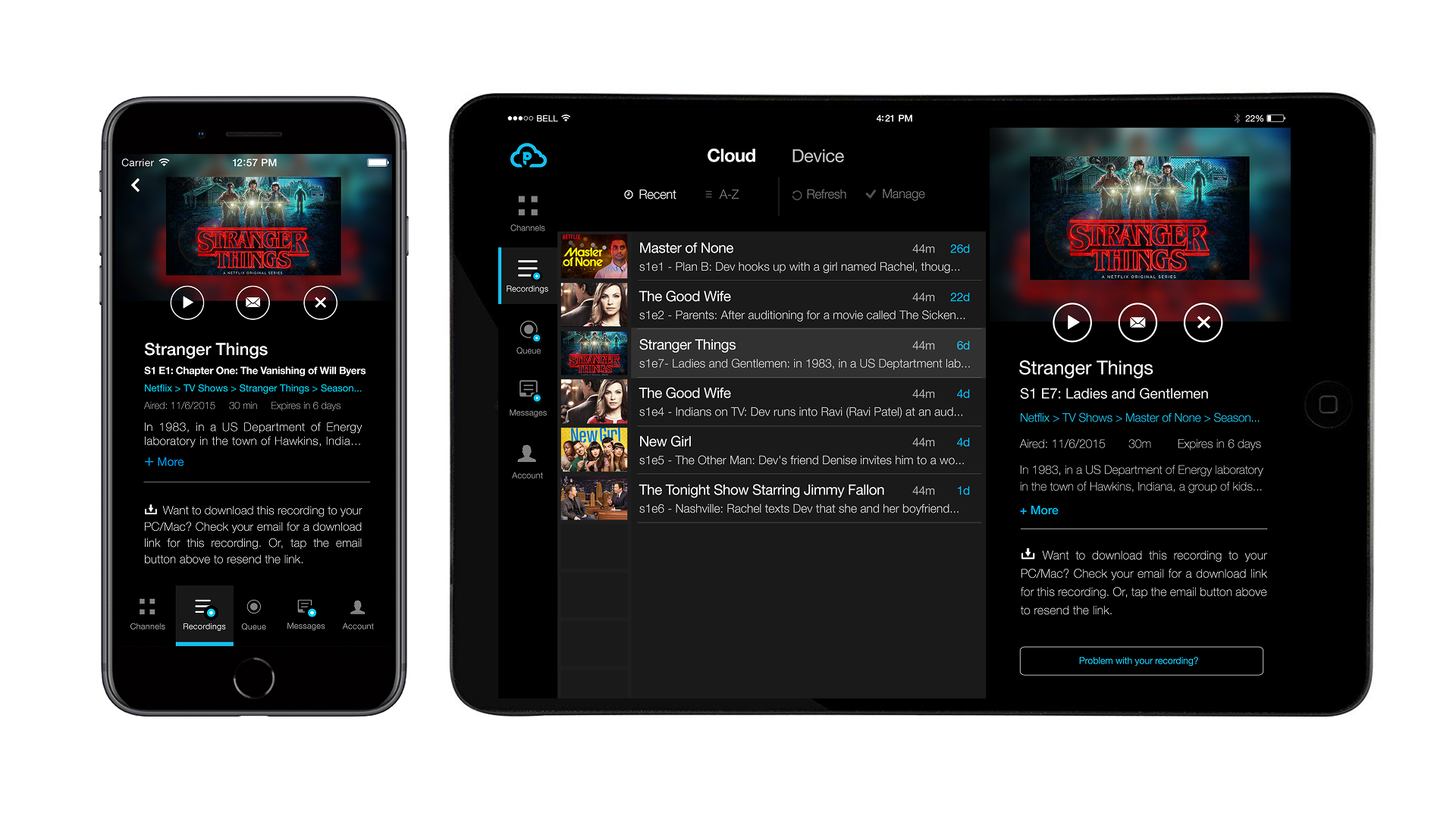
We consolidated previously separate applications into a unified, cloud-based ecosystem, where recording, storage, and playback could be managed seamlessly. This reduced friction, clarified the value of the product, and created a more intuitive experience.
BRAND CONSISTENCY ACROSS PLATFORMS
PlayOn (and PlayLater, etc) existed across desktop, mobile, TV, and console, but lacked a shared design language.
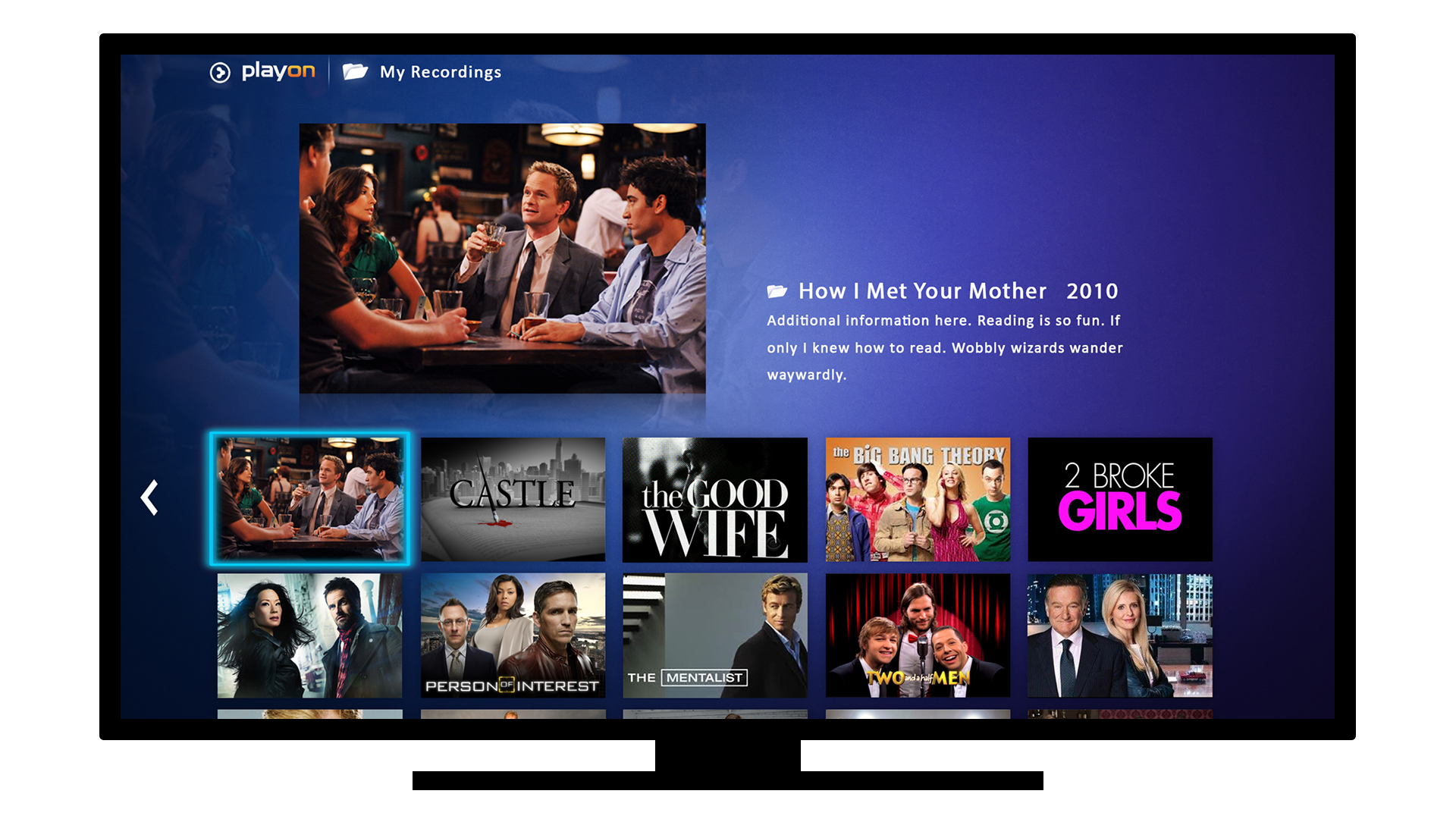
We introduced a unified design system that aligned interaction patterns, navigation, and visual hierarchy across all touchpoints. This created a sense of continuity and made it easier for users to understand how the system worked regardless of device.
The goal was consistency not just in appearance, but in behavior.
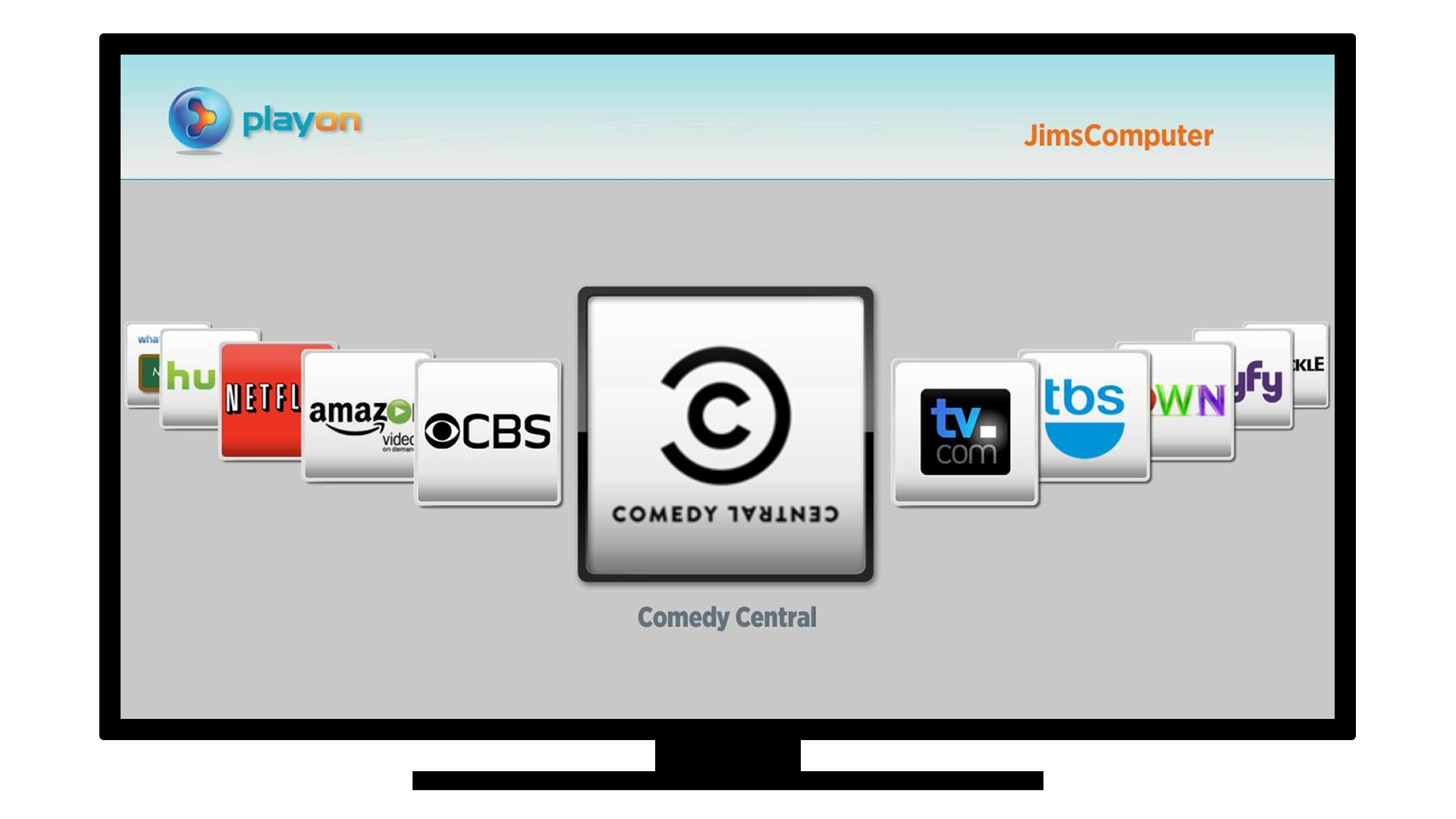
Image: PLAYON's 10-foot TV UI before/after, focusing in colorful visual-forward redesign, rich browse features and clear information hierarchy
SUBSCRIPTION-BASED BUSINESS MODEL
The original model relied on one-time purchases, which had driven the creation of multiple add-ons and fragmented offerings.
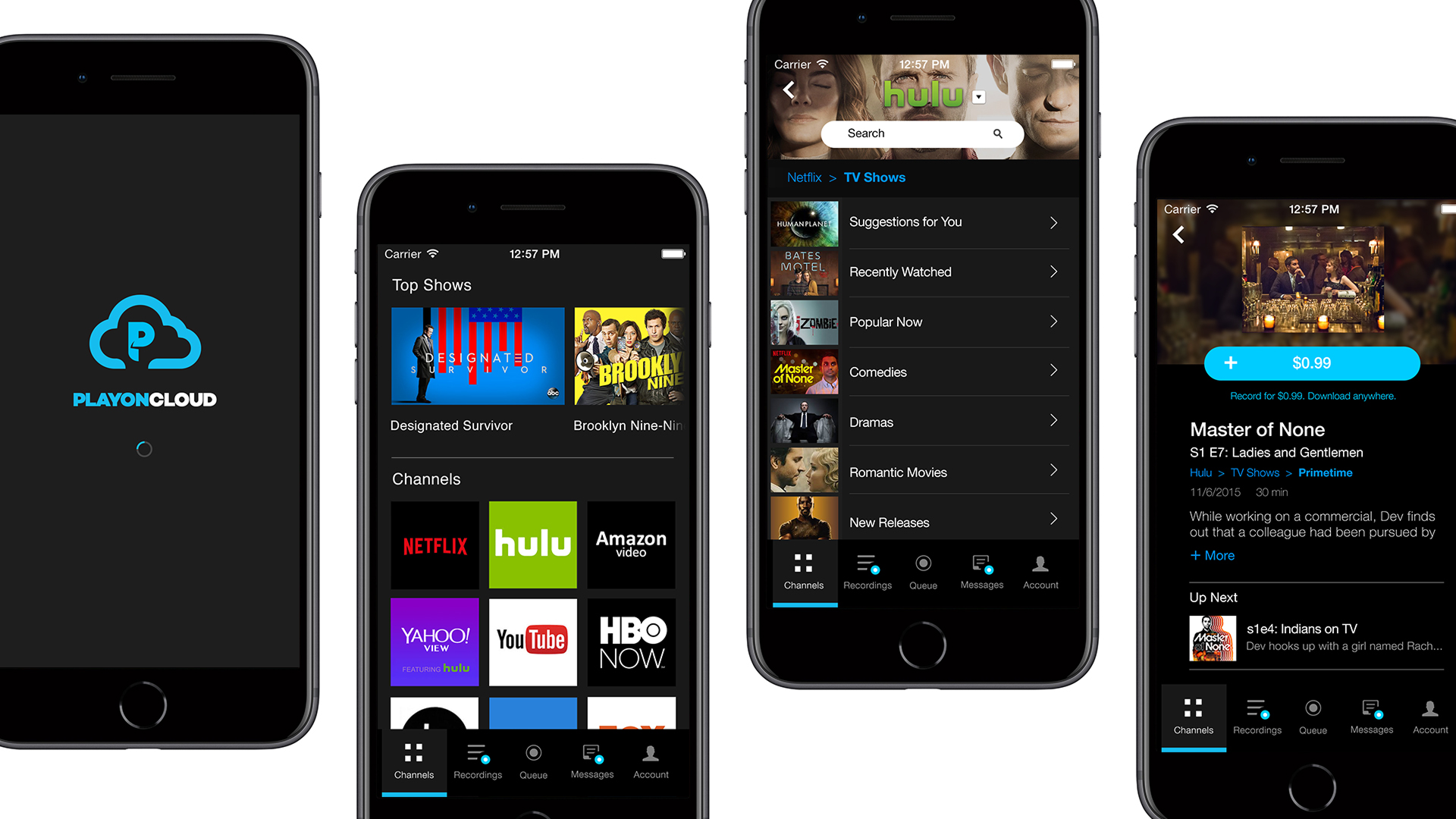
Through competitive analysis, customer interviews and AB testing, I helped the company transitioned to a subscription-based model, reframing PlayOn as an ongoing service rather than a set of discrete products. This simplified the purchasing experience, created a clearer funnel, and supported long-term revenue.
Image: Subscriptions most focused on driving mobile engagement, and with it expanded design and support for smartphones and tablet experience
RECOMMENDATIONS OVER ENDLESS BROWSING
One of the most consistent insights from our research was how much time people spent simply deciding what to watch.
Users described wasting hours each week (even daily) jumping between services, browsing endlessly without committing to anything. The problem wasn’t access to content, it was the friction of information silos and paralysis of choice.
We realized that browsing alone wasn’t enough.
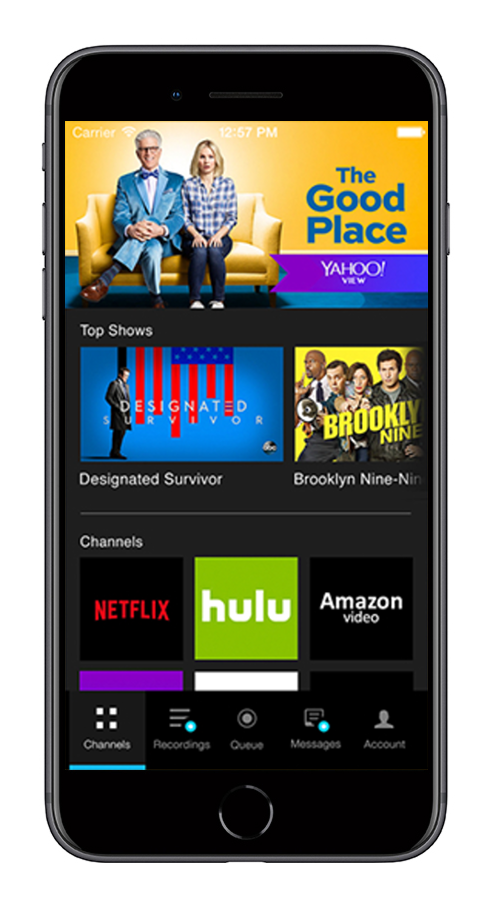
Instead of treating PlayOn as a utility for managing content, we shifted toward a system that actively guided users. We introduced recommendation features that surfaced relevant shows across services, based on popularity, recent activity, and user behavior.
This wasn’t about being perfectly accurate. It was about helping users move past the moment of indecision.
By giving users a starting point, even an imperfect one, we reduced friction and created momentum. People no longer had to ask “what should I watch?” before engaging with the platform.
This shift had a significant impact. PlayOn became the first stop in the viewing experience, not just a tool used after decisions were made. Engagement increased several-fold, re-engagement improved especially with the introduction of email recommendations delivered to their inbox, and conversion into signups and paid adoption grew alongside it.
What began as a feature became a fundamental change in how the product created value.
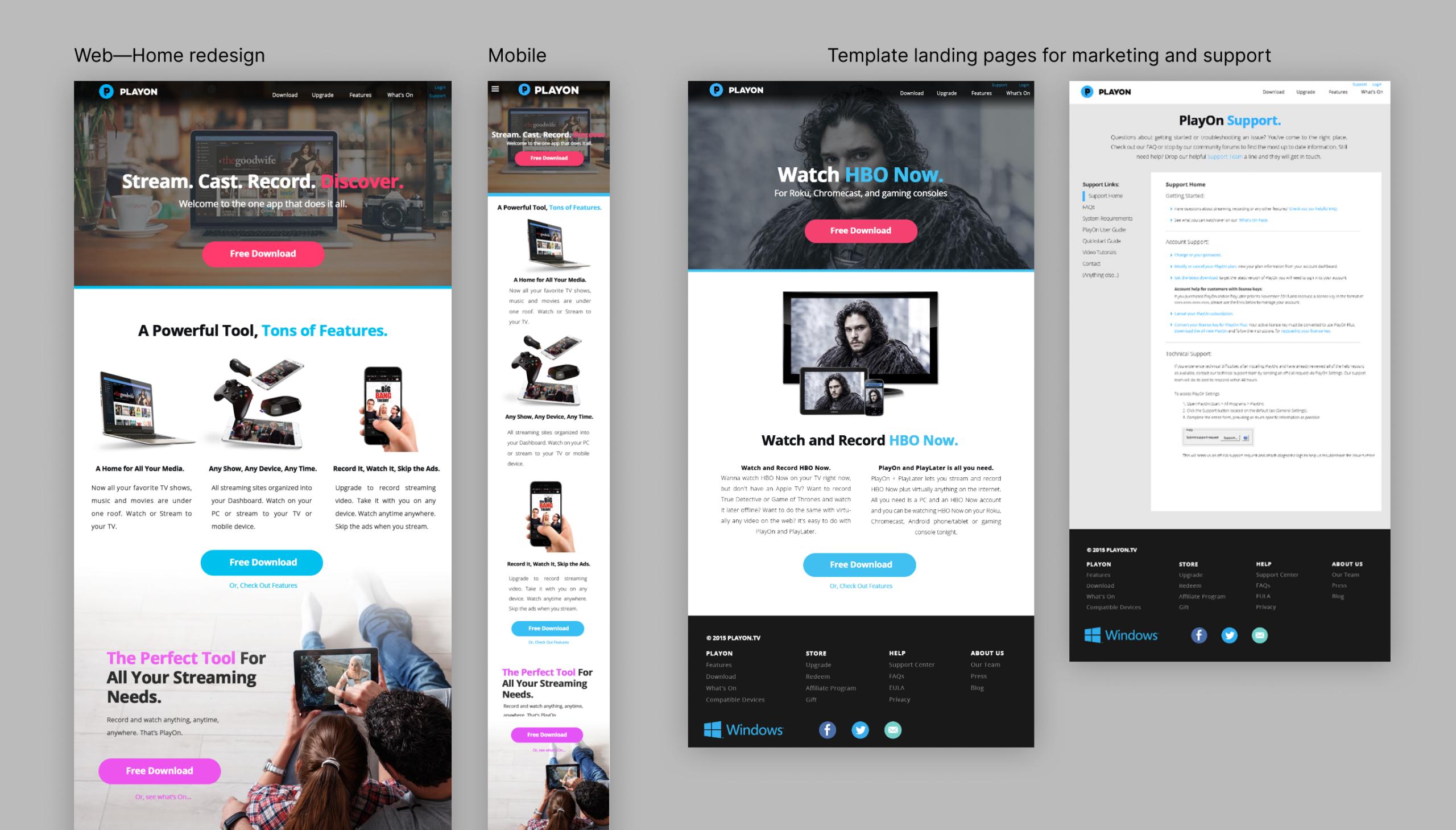
FRESH WEB EXPERIENCE
The brand and website had become extensions of the product’s fragmentation.
We introduced a new visual identity and rebuilt the web experience to communicate a clear and focused value proposition. Instead of presenting a marketplace of options, the experience centered on a single, coherent story about control and access.
This improved both first-time understanding and overall trust in the product.
IMPACT
The transformation of PlayOn resulted in measurable improvements across both product and business performance.
We saw significant and predictable revenue growth, driven by the shift to a subscription model and a clearer path from discovery to purchase. The user base expanded, and more importantly, long-term engagement improved as users continued to return to the platform over time.
Internally, the product became easier to build upon. By establishing a unified system and design foundation, the team was able to move faster, iterate more effectively, and scale the platform with greater confidence.
What had previously been a fragmented set of offerings became a cohesive product with a clear direction and room to grow.
REFLECTION
PlayOn reinforced the importance of clarity at both a product and system level.
The challenge was not inventing new functionality, but making sense of what already existed. By unifying the experience, aligning the business model, and focusing on how users actually think about their needs, we were able to transform a complex ecosystem into something intuitive and scalable.
The outcome was not just a better interface, but a stronger foundation for the product and the business as a whole.
Selected Works
3DStorytellerExperiential Storytelling Platform
Vive Reality System (HTC Vive)Spatial Interaction System
Vive Video (HTC Vive)Immersive Media Player
PLAYON.tvStreaming Media Aggregator

SkryMinimal Wayfinding for Riders